Agencies work to curb prescription drug abuse
Jennifer Ditlevson Haglund
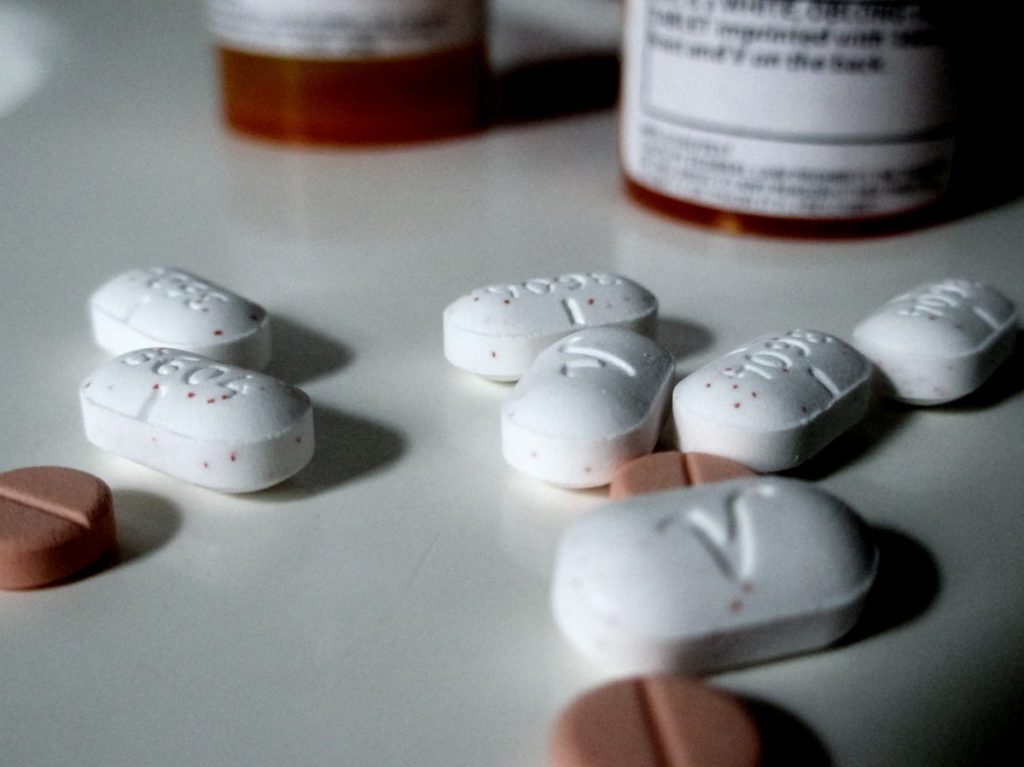
As cases of prescription drug abuse continue to increase, law enforcement officials and public health workers are trying to find ways to fight back.
Of the 50 states, only Missouri lacks a prescription drug monitoring program. That, however, isn’t due to a lack of abuse.
According to the Centers for Disease Control and Prevention, Missouri has an overdose death rate of 17 per 100,000. The national rate is 12.4 per 100,000.
Public Safety Director Keith Wood said that in Maryville he usually sees incidences of abuse with medications prescribed for behavioral modification. Abusers also seek opioid pain relievers such as oxycodone, hydrocodone, fentanyl, and hydromorphone.
Kristina Hannon, who is the vice president of behavioral health at the Family Guidance Center in St. Joseph, said that in the past several years she has seen a slight increase in opioid abuse as their clients’ drug of choice. Hannon said that between 80 and 100 people are admitted to programs at the center that serves Atchison, Holt, Nodaway, Andrew, Worth, Gentry, Dekalb, Clinton, and Buchanan Counties.
Most of the cases, she said, began with people who had legitimate injuries and needed the medication. They didn’t take the medicine appropriately or became dependent.
“That person could enter a withdrawal process if they used the medication inappropriately,” she said. “Withdrawing from opiates can be very uncomfortable, and so then people begin to seek out more opioid medication to satisfy the addiction and avoid the withdrawal process.”
Hannon’s observation reverberates with national trends. Opioid pain reliever sales in the United States quadrupled from 1999 to 2010, and the increase in prescriptions appear to correlate to higher frequencies of misuse.
By 2010, the substance abuse treatment admission rate for opioid abuse was seven times higher than in 1999. Deaths related to prescription drugs account for more than cocaine and heroin deaths combined.
Having a prescription drug monitoring program, Hannon said, could help to reduce overdoses in Missouri.
“If we can implement a prescription drug monitoring plan like every other state has that has appropriate, reasonable safeguards for people’s civil liberties, I think it can be a valuable tool in helping prevent deaths that are attributed to opioid abuse in particular,” Hannon said.
Developing a prescription drug monitoring program can be tricky, Hannon said.
“It’s like walking a tightrope,” she said.
Opponents of implementing a plan in Missouri argue that such a program can too easily infringe upon individual rights to patient privacy.
Hannon said that even without a PDMP, doctors can use information sharing systems to ensure they make informed choices regarding a patient’s history.
Having a PDMP, however, wouldn’t alleviate problems with fraudulent prescriptions.
Some of these cases can be traced across the country. Wood described a situation where a doctor in Florida was writing prescriptions for someone in Kansas. The person who received them was selling pills all over Kansas and Missouri.
According to Wood, the cases become more difficult to track when they involve a person taking a few pills at a time from a family member and selling them individually. Other times people stage burglaries and report medicines missing in order to get a refill.
“Our flag is up a bit higher about things when we suspect a false report,” Wood said.
Usually, pharmacies won’t refill a missing prescription unless a police report is filed.
Jamie Burnett, who works as the pharmacy manager at the Maryville Wal-Mart, said that over the years he’s watched and learned how to spot potential cases of medicine misuse.
Burnett said it is vital for pharmacists to communicate with each other when they see situations where customers come in with prescriptions from multiple doctors, or if they have a habit of requesting early refills.
To minimize abuse situations from employees, Burnett said he takes monthly inventory of Schedule II drugs matching actual pill count to computer records. Burnett added that Missouri does not have a state law requiring mandatory monthly checks with these drugs.
Law enforcement officials and medical professionals address this problem for prevention and correction. Still, those who abuse prescription drugs need to find help for recovery.
The Journal of the American Medical Association published a study last Tuesday that reported that only one-sixth of people struggling with opioid addiction sought treatment.
“Once you go down that slope, it’s hard to find a place to stop,” Wood said.
Apart from shame or fear of incarceration, Hannon said that cost plays a role in treatment. Although doctors can prescribe medical treatment that blocks the effects of opioids, drugs like Suboxone and Vivitrol can be cost prohibitive.
Vivitrol, for example, is an injectable drug usually administered once a month. One injection can cost $1,200. Most people receiving medical treatment for addiction can stay on the regimen for up to a year.
Without insurance, patients have to rely on whether or not a treatment center has government funding to cover the need.
Hannon said many uninsured people go without, but that doesn’t mean there isn’t any help for them. Treatment centers offer, and sometimes require, psychiatric help.
“We won’t prescribe [Vivitrol] if the person says, ‘All I want is the medicine, and I don’t need any therapy to address anything else,’” Hannon said.
The Family Guidance Center treats anyone over 18, but Hannon said she has seen prescription drug abuse in people as young as 15.
“It runs the gamut,” she said.
In geriatric cases, sometimes a person may not be abusing the drug but suffers adverse effects because of adjusting to a new medication or dose.
“I’m not saying that seniors aren’t addicted to prescription medication, but we don’t see abuse amongst them as we do with the younger ages,” Wood said.
The Office of Public Safety hosts a semi-annual takeback program. This year, they collected 155 pounds of prescription medications.
“The poundage keeps going up,” Wood said. “We’re a medication-based society.”
To curb potential abuse, Wood said the department takes any unused and unwanted prescription medicine at any time.
“You can call and we’ll get them at your door,” Wood said.
For more information about drug abuse treatment, contact local healthcare providers. For confidential advice about recovery programs, call 888.599.4340.