
Questioning homogenized beautification
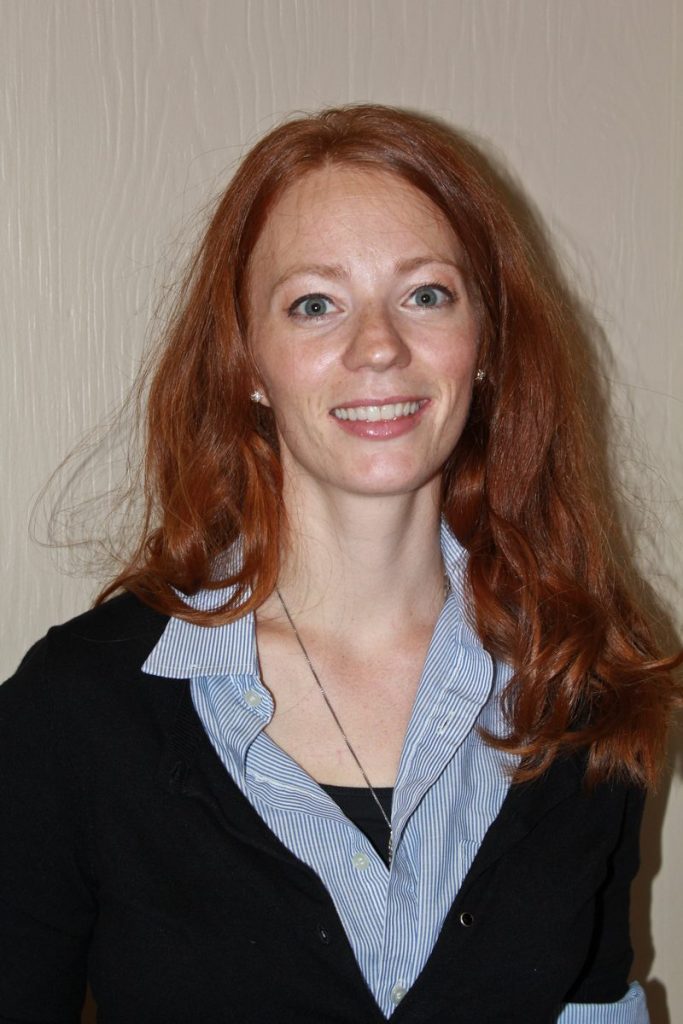
Jennifer Ditlevson Haglund
Two years ago, I was driving to work and saw a distracting billboard advertising services to turn me into a “hot wife.”
A few miles down the highway, another gigantic billboard promised me a happier Valentine’s Day if I were to order a grande instead of a tall “cup.”
Disgusted and fuming, I put it together: I needed to forget my brain to develop my ornamental attributes to find lasting happiness.
Every day on my way to work, I counted the plastic surgeons’ offices waiting for me to succumb and offer my savings to inch a little closer to becoming a Stepford Wife.
Once I had my daughter, I thought moms relaxed about having fuzzy hair and smile lines. I was wrong. Where I lived, there were magazines featuring all the area attractive, successful mothers whose tummy tucks were scheduled with their C-sections.
Men suffer pressure to achieve aesthetic perfection as well, but women still request the majority of plastic surgeries.
A report from the American Society for Aesthetic Plastic Surgery noted that although men continue to use more cosmetic services, they still only account for 9.4 percent of the total.
I don’t want to demonize women who get plastic surgery. People I love have undergone cosmetic procedures not falling under the “reconstructive” label for all kinds of reasons. It isn’t my place to condemn them.
Yet the normalization of plastic surgery bothers me.
According to a June article in Time, doctors performed more than 15 million cosmetic procedures in 2014. That is more than twice the amount recorded in 2000. The ASAPS published a report in 2014 citing the top five surgical procedures: liposuction, breast augmentation, eyelid surgery, tummy tuck, and nose surgery.
But plastic surgery now reaches far beyond Botox injections, face lifts, and other usual areas targeted for reductions and augmentations. Feet, hands, ankles, and toes are getting renovations.
Numerous advertising campaigns try to celebrate the allure of women behind digital retouching, but the numbers for surgical and non-surgical cosmetic procedures indicate a tendency to homogenize beauty.
When I taught, I mostly worked with Asian students in high school. Several of the girls told me they wished they had enough money or were old enough to get double blepharoplasty. The surgery would give them the coveted eyelid crease and the appearance of having bigger, round eyes like the majority of whites. I can’t count how often I tried to convince them they were fine as they were.
I haven’t done the research, but I see class and race issues couched in here.
So many people seeking cosmetic work want to look like the retouched photos of celebrities they see — and most of them are white. Moreover, these touch-ups are becoming more economically feasible for a broader consumer base, but it isn’t a quick trip to Wal-Mart, either.
Some of the most influential women in my life had dark unibrows, short hair, and crooked noses. Some of them wore sizes in the double digits, and I’m sure several of them had thighs that touched. They were smart, useful, and taught me things. Most of them transcended a world entangled with image and presentation because they had too many things to do.
When I see women use big machinery and clean their gutters without men interfering or standing by waiting to help, I like that.
It reminds me of how my mother drove enormous vehicles to transport more than half a dozen children all over town while she balanced earning her bachelor’s degree, planting and tending herb gardens, mowing the lawn, and trying to make us look cute in clothes from Goodwill.
My father always said my mother had a “natural beauty.” Although he probably meant it as a compliment, I understood the implicit message.
She didn’t take the time to get glamorous very often and could be a lot prettier if she did. She also never “fixed” her nose after she was thrown through a windshield in a car accident that took place during her late teens, either.
Dad was a great guy and I miss him every day, but I’m not sure he understood exactly how busy she was doing things when he said things like that.
Women should do what they want with their bodies. I won’t argue because that’s personal, but I wish these procedures didn’t have to erase so many of the things that make them unique.



