
Veto session allows several bills to become new Missouri laws
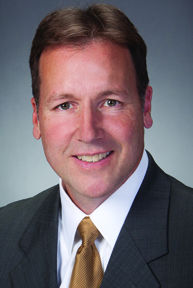
Rep. Allen Andrews
The annual Veto Session began Sept. 16 at noon and by the time it was finished 12 hours later, the House and Senate had combined to override the governor’s vetoes on six House and four Senate bills.
The annual Veto Session is required by Article III, Section 32 of the Missouri Constitution, which calls for the General Assembly to convene each September to consider vetoed bills.
Overrides have typically been rare in the state’s history because a successful motion requires two-thirds majorities in both legislative chambers — 23 votes in the Senate and 109 in the House of Representatives.
Override efforts begin in a given bill’s chamber of origin. If the originating chamber fails to override, the other chamber can take no action. Following are the bills as discussed:
Right to Work Bill (HB 116) — Failed to Override
During the 2015 regular session, the House and Senate had worked together to send Right to Work legislation to the governor’s desk for the first time in the history of the state.
The governor then vetoed the bill, which set up a much-discussed and much-anticipated vote to enact the bill into law despite the governor’s objections.
Wednesday afternoon, the House spent nearly two hours debating the bill before finally attempting the override motion. In front of packed galleries filled with both supporters and opponents of the bill, the House failed to approve the override motion by a vote of 96-63.
In effect, the bill would have given workers in Missouri the right to decide whether to join a union. Specifically, it would have prohibited an employer from requiring a person to become a member of a labor organization as a condition or continuation of employment.
Supporters of the idea say it is meant to make Missouri a more attractive location for new and existing job creators. They say it preserves the rights and freedoms of the individual to choose whether to join a union.
Opponents say it is an attack on organized labor and a move that would lead to lower wages for workers.
Preventing Undocumented Immigrants from Receiving A+ Scholarships (SB 224) — Veto Override Successful
Another bill now set to become law is meant to ensure scholarship benefits through the state’s A+ Schools Program are received only by young people who are legal residents of the United States. Specifically, the bill requires a student to be a United States citizen or a permanent resident in order to receive benefits.
Supporters of SB 224 say the bill ensures the limited amount of scholarship money in the A+ program will be reserved for legal Missouri residents. They say it is unfair to Missouri families to see diminished scholarship amounts for their children because the dollars are instead going to young people who are not legal residents.
Opponents of the idea say it is an attack on young people who are in the country illegally through no fault of their own. They say the legislature should work to increase funding for the A+ program so all children can benefit.
The A+ Scholarship program allows Missouri high school students who have met certain requirements to receive state-funded assistance to attend participating public community college or vocational/technical school, or certain private two-year vocational/technical schools. The program allows thousands of Missouri students to pursue a college degree each year.
Other bills now set to become law:
HB 150 — Unemployment reform
HB 618 — Changes the laws regarding the disposition of human remains. Expands the types of medical professionals who can attest to a cause of death, to include physicians’ assistants, assistant physicians and advance practice registered nurses.
HB 722 — Uniform minimum wages.
HB 878 — Specifies that the Department of Public Safety must have the authority to commission corporate security advisors and establishes procedures to do so.
HB 1022 — Authorizes a return of premiums paid by insureds.
HB 1098 — Changes the laws regarding trust companies.
SB 20 — Creates a state and local sales and use tax exemption for material, machinery, and energy used by commercial laundries in treating or cleaning textiles.
SB 142 — Requires the Department of Natural Resources, when developing a state implementation plan, state plan, or non-point source management plan for submission to the Environmental Protection Agency, to prepare an implementation impact report in lieu of a regulatory impact report in collaboration with certain other state entities.
SB 345 — Increases the fee that banks can charge consumers for loans of 30 days or more, to a maximum of $100.



