Chief, sheriff weigh impact of violence against officers

Maryville Public Safety Director Keith Wood
For law enforcement officers nationwide the last two weeks have been filled with violence, tragedy, and mourning.
According to the Associated Press, the shooting death of police Lt. Joseph Gliniewicz on Tuesday in northern Illinois was the eighth such incident in the United States in the past month and the fourth in a span of only 10 days.
And while one might expect a high level of violence against officers in the urban cores of major cities, Gliniewicz was killed in Fox Lake, a resort town north of Chicago with fewer than 11,000 residents.
Another officer-victim, Henry Nelson, a policeman in the south central Louisiana town of Sunset, population 2,800, was shot and killed Aug. 26 while responding to a domestic-violence call.
Of course, much of the national media spotlight over the past year has focused on violence committed by police officers, not against them, following the shooting death of Michael Brown on Aug. 9, 2014, by former Ferguson officer Darren Wilson, an episode that triggered rioting and unrest in St. Louis and other cities.
But throughout the resulting debate on topics like police militarization and the appropriate use of lethal force, some officers are saying the real issue is that people who carry badges and guns are more likely than ever to become targets.
Call it “the Ferguson effect.”
Maryville’s police chief, Public Safety Director Keith Wood, said Thursday that while citizen anger at law enforcement may not be a big problem locally, coverage of the issue by the national media has created a “punching bag mentality” on the part of some officers.
“While I think we are appreciated on the whole,” Wood said, “Sometimes it’s hard to see that when you’re watching the evening news.”
Wood said recent attacks on officers elsewhere have led members of his department to pay closer attention to various sources within the law enforcement community about danger signs to be looked out for, a precautionary response he fears may “distract a little bit from the officer’s daily routine.”
Sometimes, he said, an officer may be casting too much of “an extra eye over his shoulder,” because the profession as a whole is “being charged with something that may or may not be broken and that we may not be responsible for breaking.”
Another concern, Wood said, is that elected officials — traditionally strong supporters of law enforcement — are perceived by some to have wavered since Ferguson, leading to a feeling that “some folks who you would like to be in your corner may not be.”
He said that lack of support appears to have extended “to our federal counterparts” in agencies tasked with “policing the police,” where policies seem to have shifted toward presuming officer guilt rather than officer innocence.
In some instances, Wood said, federal officials appear to have “lost touch with the reality of what the street is.”
Wood said all of those factors carry potential for affecting an officer’s reaction in the field when the use of force, especially deadly force, is called for.
“Sometimes the literal difference between life and death can be a split second,” he said, adding that too many officers might now hesitate at a crucial moment because they are worried about “what their actions will look like on the 5 o’clock news.”
Still, in Maryville, Wood said he believes most people respect peace officers and support them as they go about their work.
“I still like to think we are strongly supported by the silent majority,” he said, “but sometimes that vocal minority is just deafening.”
From his office just a block away from Maryville Public Safety headquarters, Nodaway County Sheriff Darren White said this week that his deputies “definitely” feel their jobs have become more dangerous, since Ferguson, and that an increasing number of people appear to view officers with anger and distrust.
And not just police, either, but almost anyone connected with the criminal justice system.
“It’s dangerous for law enforcement officers,” White said, “but also for people working in jails, in courts. Everybody in uniform. They’ve all become targets.”
The sheriff said he understands that numerous incidents involving allegedly excessive force on the part of police are seen by many as hate crimes, especially when such violence is directed against non-white suspects. But he argues that hate is a two-way street, and said he believes few officers are motivated by racial prejudice.
“Are these (attacks on officers) not really hate crimes?” White asked. “This has little to do with someone’s color and everything to do with the hatred that people have within themselves.”
White said he doesn’t think Nodaway deputies are necessarily encountering more hostility than during the pre-Ferguson era, but he does think they are more on their guard, more apt to “look over their shoulder and be aware of what’s going on.”
Which is a good thing as far as it goes, but White, like Wood, said he worries that some officers may now be prone to hesitate in situations where the choice to use force is the right decision.
“We’ve already lost that edge,” he said. “I truly think that this spike in the number of officers being assaulted and killed is a result of what happened in Ferguson. … It’s not a concern. It’s a fear. People are worried that they could become the next Darren Wilson.”
But despite the perception that police are under attack by a segment of society that neither trusts nor respects law enforcement, there are numbers that show the problem is just that, a perception.
Statistics kept by the Law Enforcement Officers Memorial Fund show that the trend in shooting deaths for police is actually headed downward.
Such fatalities have decreased 13 percent — from 30 shootings to 24 — compared to January-September 2014.
In addition, memorial fund records show that the average number of officer shooting deaths for the first six months of each year — which is how the organization gauges trends — was 62 through the 1970s.
The worst half-year period over the past five decades was in 1973, when 84 officers were shot and killed. Through the early 2000s, the six-month average fell to 29.
unknown
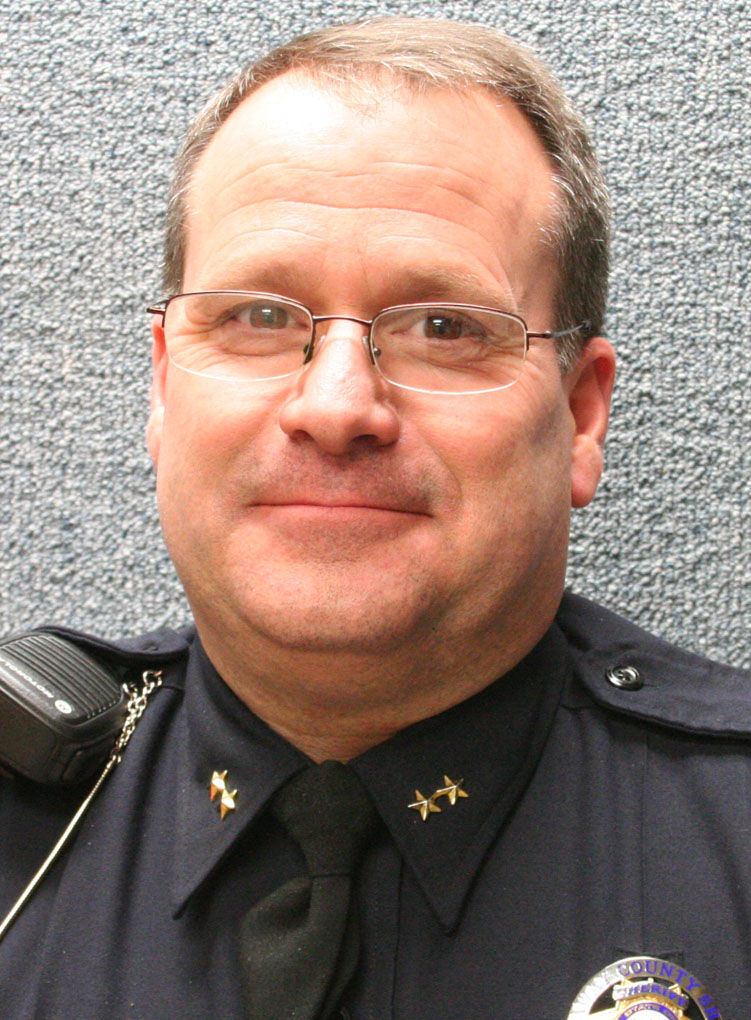
Nodaway County Sheriff Darren White