
Am I in the wrong business, or are these job titles wrong?
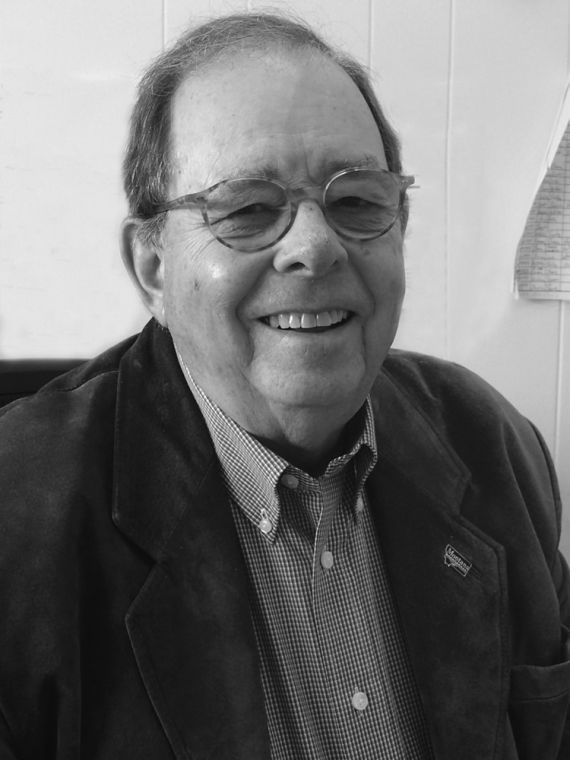
Jim Fall
It seems like every day brings yet another reminder that I may be losing my place in the fast lane.
Well, I’m not certain I was ever really in the fast fast lane, but the one I was in always moved right along as far as I was concerned.
The speed required to run your own shop at a weekly newspaper was more than moderate, but as I would find out later, it was certainly not what was required to stay ahead of the fast-track corporate folks who wheeled and dealed with the metropolitan dailies.
I was silly — selfish? — enough to think I could keep up with the way those folks operated, but it didn’t take too long just being associated with them to realize they marched to a different drummer.
Sure, we were all in the newspaper business, but the “business” I learned as a Weekly and Small Daily Publications “major” in the School of Journalism at the University of Missouri — longer ago than I guess I realize — was not the same business most of today’s newspaper executives practice.
Where this is headed comes to a fork in the road here pretty quickly, and as Yogi Berra so succinctly advised, I will take it.
And who knows, perhaps my rant about the direction I think too many newspaper moguls are taking this profession will just possibly sound an alert, an alarm, or two, or three, to some others who ply your skills in totally unrelated fields.
I just have a feeling I am not out there alone on this one.
What prompted my latest flurry of feelings about this business that I truly love — why else would I be trying to do what I am trying to do at my age and stage in life? — was a recent article forwarded to me by another retired newspaper association director, Dennis Schick of Arkansas. It was written by Brian Steffens, currently the director of communications for the Reynolds Journalism Institute, located on the campus of the same University of Missouri J-School from which I was graduated.
Mr. Steffens is also a former executive director of the National Newspaper Association, the organization that has historically been the spokesman, the champion, of community newspapers in this country. He came into that position while I was the newspaper association executive in Montana, and he left, if I remember correctly, shortly after I retired 10 years ago.
I have no feud with Mr. Steffens’ opening statement, to wit:
“Back to school triggers much more than trips to Target and Walmart to fill up dorm rooms and apartments,” he says. “It brings the Beloit College Mindset list, as it has every year since 1998. It reminds professors that freshmen were likely born in 1997 — post-moonwalk, Watergate, Vietnam, etc.”
I will admit I am not familiar with the Beloit College Mindset list, but I can’t quibble over much of anything else he says — to that point.
“It’s also the time that journalism students sit down with their academic advisors, which triggers a nervous conversation: What kind of jobs will be out there at graduation time?
“Today’s journalism has also changed from 1998, and will look somewhat different to graduates in 2019,” he says.
And that brings us to the forewarned “fork in the road.”
In his article, Mr. Steffens then lists a comprehensive sampling of 34 of the “journalism job titles” being talked about this year.
That list includes, but is certainly not limited to, such promising assignments as “Director, Partnerships; Senior Director of Social Content Strategy; Audience Engagement Producer; User Experience Lead; Partner Engineer; Media Innovation; Executive Mobile Editor; Digital Optimizer; Consumer Experience Director; Digital Consumer Experience Director, and Executive Emerging Media Editor.”
Excuse me.
“Houston, we have a problem!”
To be fair, there were a couple of titles among the 34 that sounded somewhat related to the community journalism business as I learned it. As I believe I know a little something about it.
The local news business as we make every effort to practice it every day at the Maryville Daily Forum.
I truly and honestly believe that the community journalism business is — or at least can be — alive and well in smaller communities all over America. In the Maryvilles of the world, the St. Josephs. Even the Kansas Citys, if their corporate ownerships would open their eyes to what their mission is.
A total oversimplification, but we are newspapers
NEWSpapers, if you will.
But all too often, sight of that mission is lost, perhaps because it is not fancy enough.
We have to do no more than what we really need to do — which is to assimilate the goings-on in our communities on a daily basis and disseminate that information to our audience in an understandable, unbiased manner.
Certainly, we need to progress as the times dictate. We make our product available on multiple platforms so our readers, subscribers, can have access to it as completely as is humanly and technically possible, and as quickly as possible.
Oh yes, and as accurately.
Has that mission changed because a significant segment of our audience was born post moownalk, Watergate and Vietnam?
I don’t think so.
Do we need to rely on the techniques available to us through the electronic media, even through social media?
Yes we do. But we must adapt them to our standards of accuracy, coupled with immediacy; not reduce our standards simply to be first, or friendliest, and let it go at that.
Being selfish again, I truly believe we are meeting those standards at this newspaper at this time.
Completely to our expectations? No, but we give it our best shot every day.
Our news, and advertising, shows up on the Daily Forum website, on Facebook and/or on Twitter before the traditional print edition is delivered, and it is constantly updated.
Maybe we do need a Digital Consumer Experience Director to keep us in that ballgame, but I’m quite comfortable relying on the skills of competent, plain ol’ Reporters and Editors who understand what community journalism is all about.
End of sermon. Amen.



