Delta Chi house a window into local history
TONY BROWN/DAILY FORUM
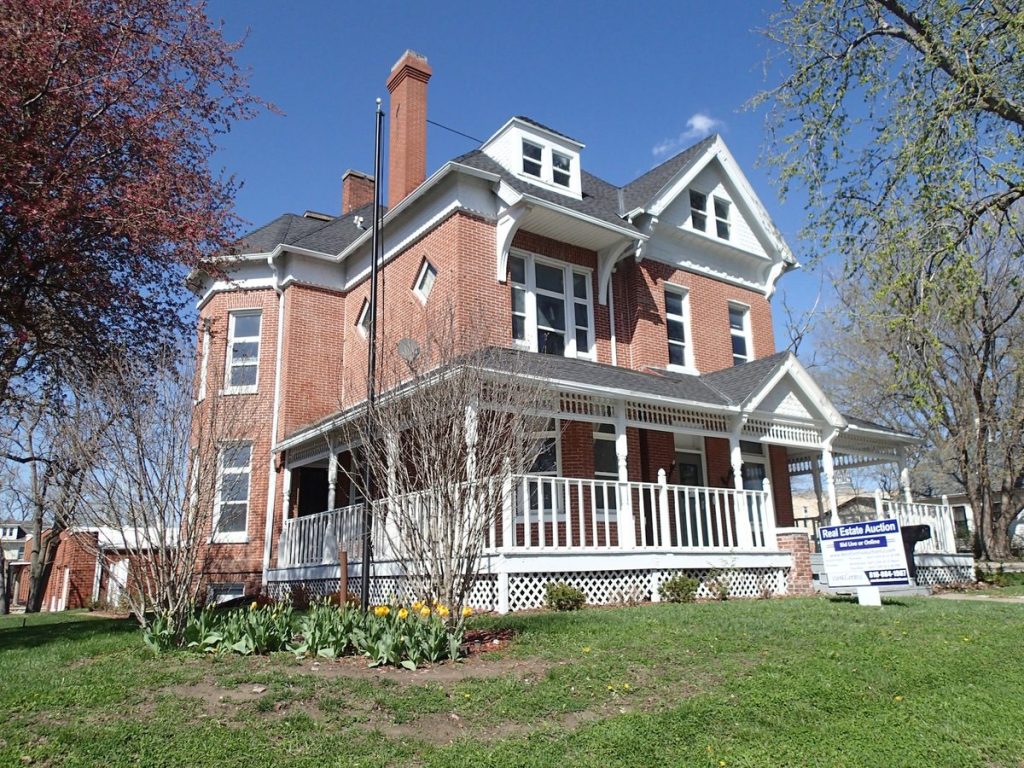
Still grand but showing its age, the former Delta Chi fraternity house, once the seat of the locally prominent Michau and Townsend families, will go on the auction block later this month. The house has been vacant since Delta Chi was banned last year by Northwest Missouri State University following a series of alcohol-related “risk management violations.”
Like a proud old sailing ship anchored and abandoned in a derelict harbor — scarred and weathered but still possessed of sweeping lines hinting of power, grace and beauty — Terrace Place towers over its greening spring lawn at 219 W. Second St. in Maryville.
Once the symbol of a union between two of Nodaway County’s wealthiest and most socially prominent families, Terrace Place — better known these days as the former Delta Chi fraternity house — is to be sold at auction later this month.
The three-story Queen Anne-style brick home will go under the hammer to the highest bidder at 12:30 p.m. Thursday, April 23. Offered by the West Central Auction Company, viewings for potential buyers are scheduled for noon Wednesday, April 15, and 5:30 p.m. Thursday, April 16.
Just how Terrace Place made the long journey from showplace to shell of faded grandeur is a long story, but unlike many such tales of loss and decline in countless small towns across the Midwest, this one has a teller.
Sam Mason, the underwriting sales associate for Northwest Missouri State University’s KXCV/KRNW public radio station, was a member of Delta Chi and lived in the house while attending college here in the 1980s.
He has, to put it mildly, great affection for the ornate brick home and remembers his 18 months there as a highpoint of his student life.
In a 5,000-word written history of Terrace Place compiled by Mason, he states that “the fraternity loved her and always will. We took care of her as best we could and, all things considered, the old girl has held up really well.”
Writes Mason: “In the ’70s and ’80s it wasn’t uncommon to have parties with 600 or more people in attendance. At an average weight of 150 pounds per person, she held up to 90,000 pounds of screaming, dancing, and jumping college students. This happened more than once, and it stands as a testament to how well (the house) was constructed.”
Ironically, those very social proclivities are the reason the house now stands empty. The local Delta Chi chapter was banned by Northwest at the end of the 2014 academic year after compiling a long list of “risk management violations.”
Mason, as one of two Delta Chi “conservators” charged with convincing the frat boys to clean up their act, helped lower the boom.
In an attempt to save the troubled chapter, the conservators banned drinking at the house, a strategy that failed.
“The problem was alcohol,” Mason said. “They threw one party too many.”
The house is currently owned by the Delta Chi Housing Corp., which has yet to pay off a second mortgage held by the national Delta Chi office used to finance repairs undertaken in the 1990s after water pipes burst during a winter cold snap, causing extensive damage. Proceeds from the auction will be used to discharge that debt.
But though Delta Chi is gone, Mason is hopeful that the house, at least, will get a chance to recapture past glories. One reason he wrote the long essay detailing Terrace Place’s history is so whoever buys the place will recognize the importance of the structure’s heritage and perhaps undertake its restoration.
His fear is that the structure, which still contains ornate woodwork and other architectural appointments dating to its late-Victorian heyday, may be worth more as a salvage project than a residence.
“There is a preservationist side to me that wants to see this house restored,” said Mason, who believes that the home’s colorful past could “serve as a catalyst” for its future.
Mason added that old photographs he’s seen of Maryville neighborhoods and the courthouse square bear witness to just how many historic buildings the community has lost over the decades. Saving Terrace Place, he said, could be a step toward reversing that trend.
“Once these buildings are gone, they’re gone,” Mason said. “If we don’t preserve our history, who will?”
Terrace Place was built in 1890 by Lavencour Michau, who was born in France and came to Maryville in 1856. After establishing a successful dry goods business with his brother Alfred, Michau married Amanda Wheeler.
The couple’s oldest child, Ida, was born in 1863 and grew up to marry the scion of another wealthy Maryville family, Edward Townsend, whose father, Robert, founded the R.K. Townsend Grocery at the corner of Main and West Second.
Robert Townsend left Maryville in 1888, and Mason said it is believed that upon Lavencour Michau’s retirement the two stores merged, eventually becoming the Townsend Wholesale Grocery Co., of which Edward later served as president.
By 1910 Edward and Ida Townsend had moved into Terrace Place with Ida’s mother, Amanda (Wheeler) Michau. Also in residence was the couple’s 23-year-old son Ferdinand, known as Ferd.
Later that year, Ferd married Lillian Bohm Bohner of Colorado, and brought her back to the family home.
In its original state, Terrace Place boasted a total of 13 rooms, including six bedrooms, a parlor, a great room, a ballroom, eight fireplaces, two bathrooms and a third-floor space that probably served as a servants’ quarters and nursery.
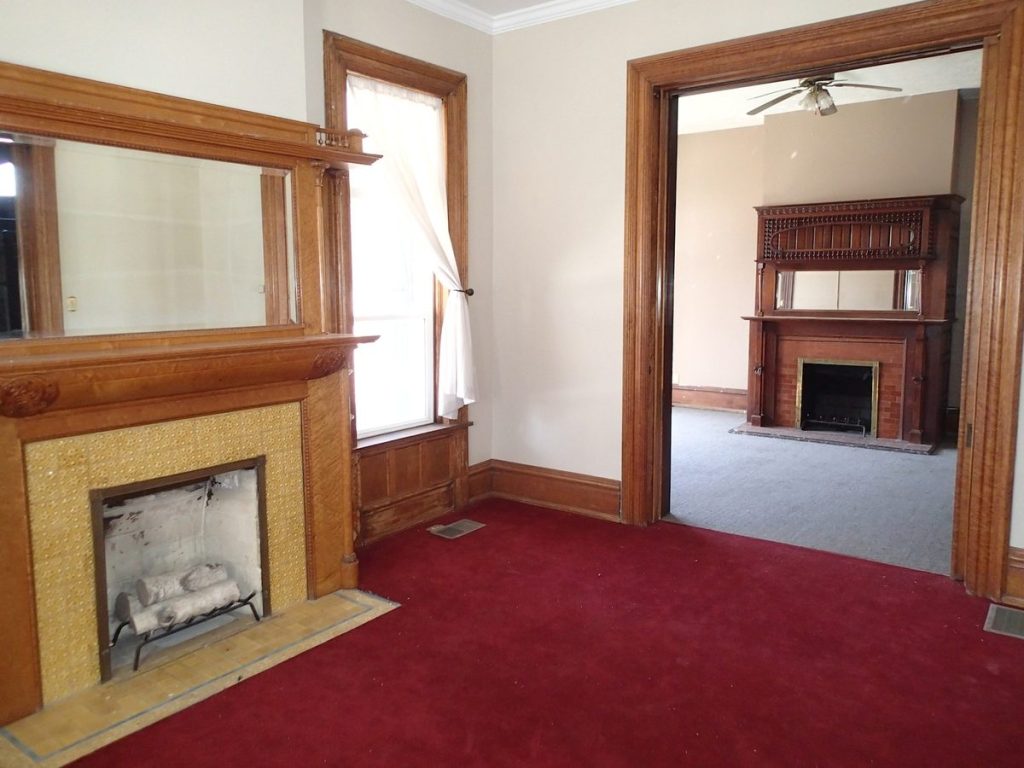
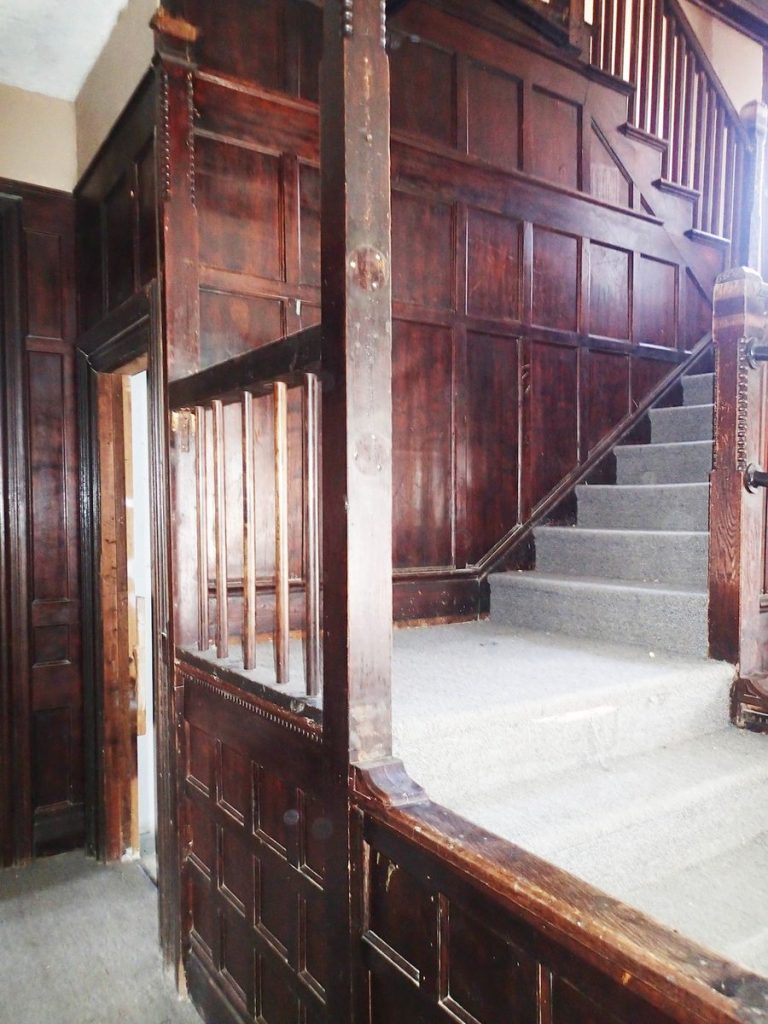
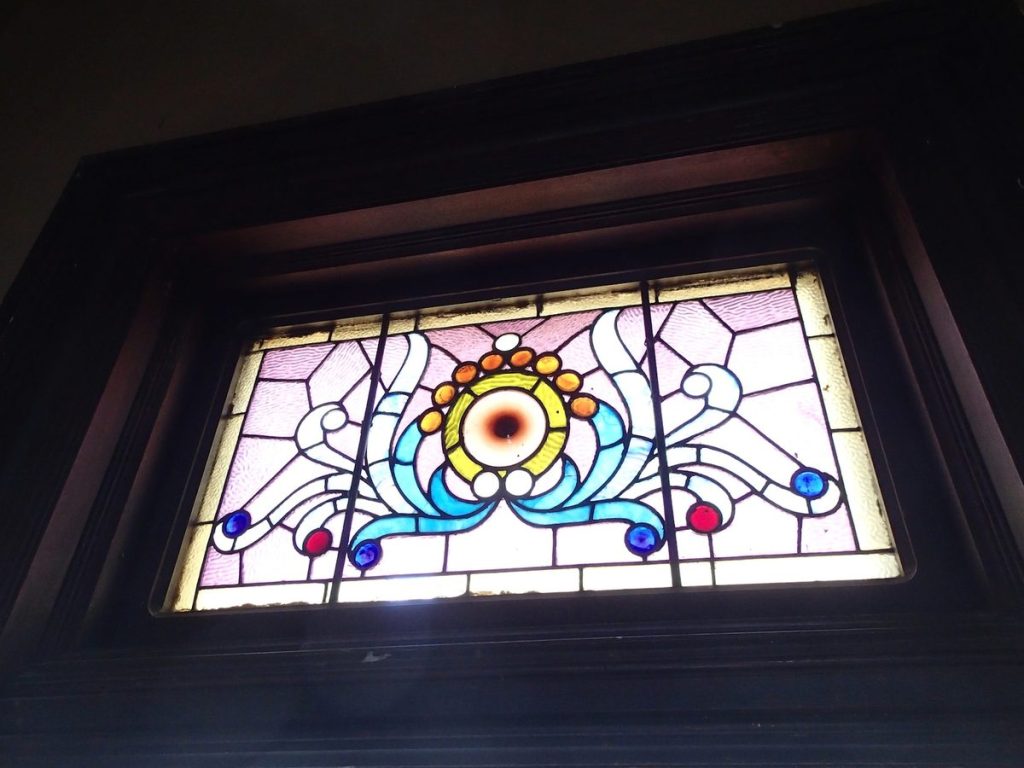
Interior appointments still intact include a stained glass window, beveled mirrors, a sliding parlor door faced with cherry and maple, a paneled staircase and ornately carved woodwork.
Mason writes that Ferd and Lillian’s son Bohm was still living at 219 West Second Street in the late 1940s when he married Darlene Strauch in Las Vegas.
Bohm Townsend was apparently a colorful personality and, according to Mason, worked as a swing-era big band promoter, booking such acts into St. Joseph’s Frog Hop Ballroom as Tommy Dorsey, Duke Ellington, Count Basie, Lawrence Welk, Benny Goodman and Les Brown.
According to family stories, Bohm Townsend sometimes invited the bandleaders and their guests to Maryville, using Terrace Place to entertain some of the nation’s most famous popular musicians.
But the glamour didn’t last. By the late 1950s, the big band craze was over, and Bohm Townsend went to work as a salesman for the family business, a career change that proved less than successful.
The 1960s brought about the decline of local wholesale grocery firms, as rural populations began to dwindle and family-owned retail food stores either went out of business or were bought out by chains such as Safeway and A&P, which had their own suppliers.
Bohm Townsend took over as co-owner and operator of Townsend Wholesale Grocery Co., but the family’s fortunes dwindled. Belongings were sold and mortgages were taken out against Terrace Place. The once-grand residence was acquired over by Nodaway Valley Bank in 1969 and purchased by Delta Chi a short time later.
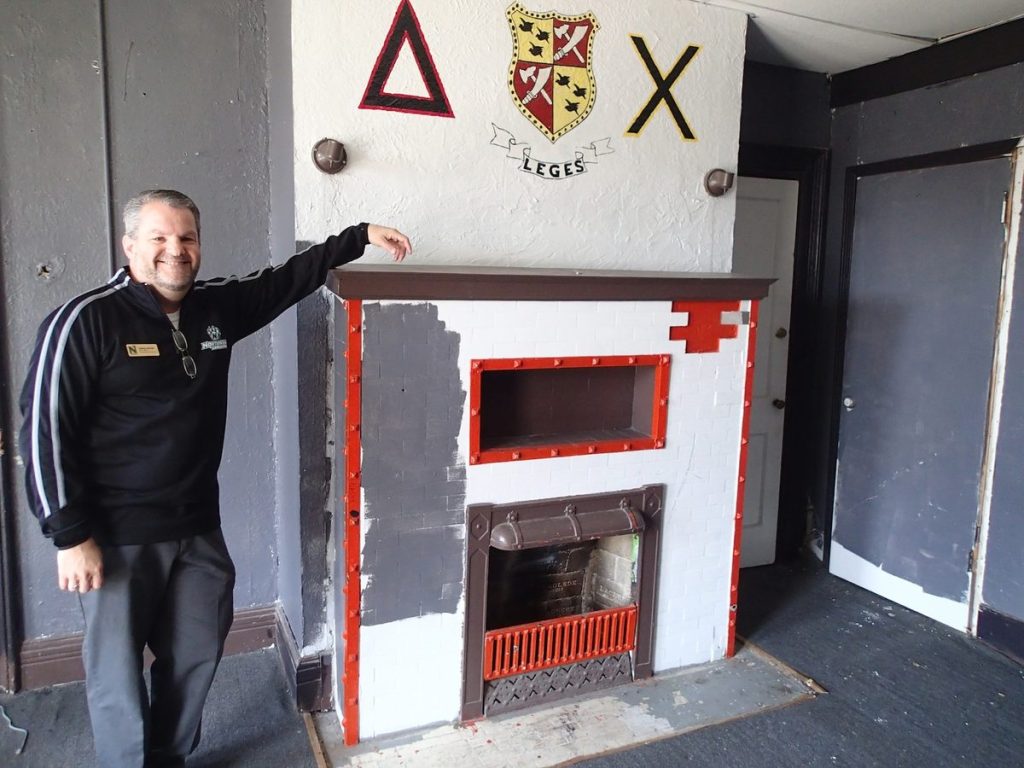
TONY BROWN/DAILY FORUM
Sam Mason stands beside a second-story fireplace in the former Delta Chi house that is still decorated with the fraternity’s crest. The house, located at 219 W. Second Street, is to be sold at auction April 23, and Mason, a Delta Chi alumnus, has been working to publicize the structure’s long history in hopes the new owner will opt for restoration over demolition.
TONY BROWN/DAILY FORUM
Ornate woodwork still graces the front parlors of Terrace Place, one of Maryville’s most historic Victorian era homes. The now-empty residence served for nearly 45 years as the Delta Chi fraternity house.
TONY BROWN/DAILY FORUM
Scarred but intact after 125 years, this paneled staircase leads from the main foyer onto the second floor of Terrace Place, a 13-room house built by Maryville dry goods merchant Lavencour Michau in 1890. The Queen Anne-style brick residence was also home to several generations of the Townsend family, which was linked to the Michau clan by marriage and operated a wholesale grocery business in Maryville for many years.
TONY BROWN/DAILY FORUM
In its original state, Terrace Place boasted a total of 13 rooms, including six bedrooms, a parlor, a great room, a ballroom, eight fireplaces, two bathrooms and a third-floor space that probably served as a servants’ quarters and nursery. Interior appointments still intact include the stained glass window shown here, beveled mirrors, a sliding parlor door faced with cherry and maple, a paneled staircase and ornately carved woodwork.
TONY BROWN/DAILY FORUM
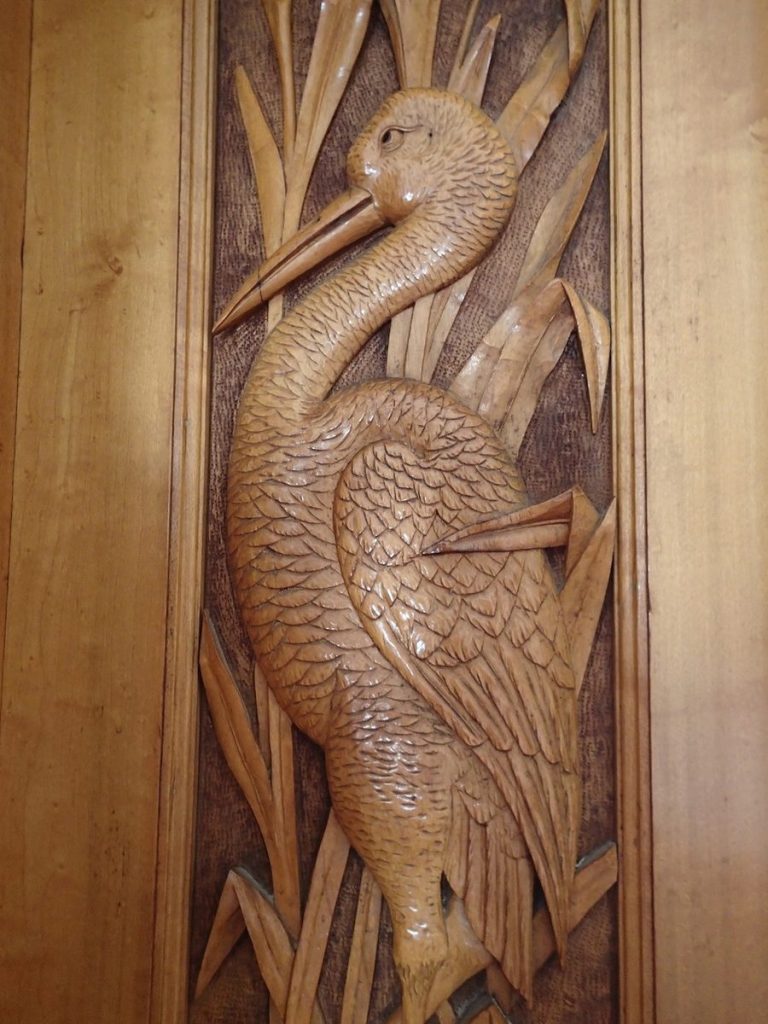
This carved pelican is part of the woodwork framing one of the fireplaces in the former Delta Chi fraternity house at 219 W. Second St. in Maryville. In early church tradition, Pelicans are symbols of Christian charity, and images of the birds were frequently worked into the interior decoration scheme of Victorian homes both in England and the United States. Once known as Terrace Place, the now-vacant frat house was for decades one of Maryville’s most elegant family homes.
TONY BROWN/DAILY FORUM
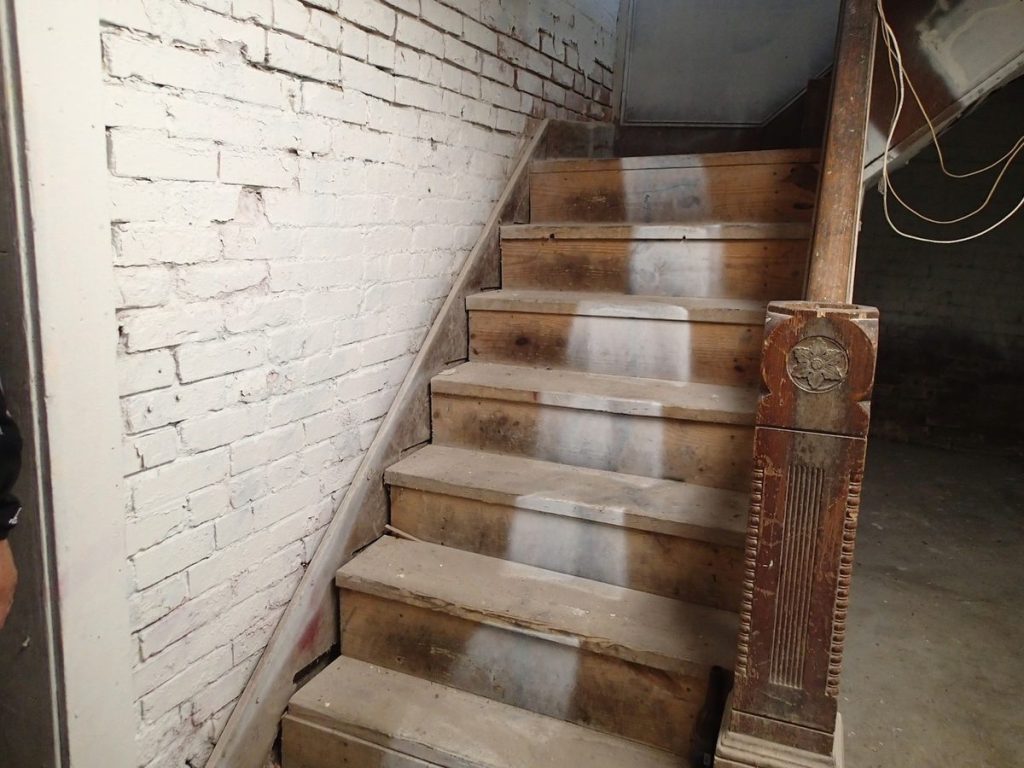
This carved newel post at the foot of the basement stairs in the former Delta Chi fraternity house offers a glimpse of the detailed Victorian ornamentation that was designed into the structure when it was constructed as a family home 125 years ago.