
Andrews opposes medical marijuana bill
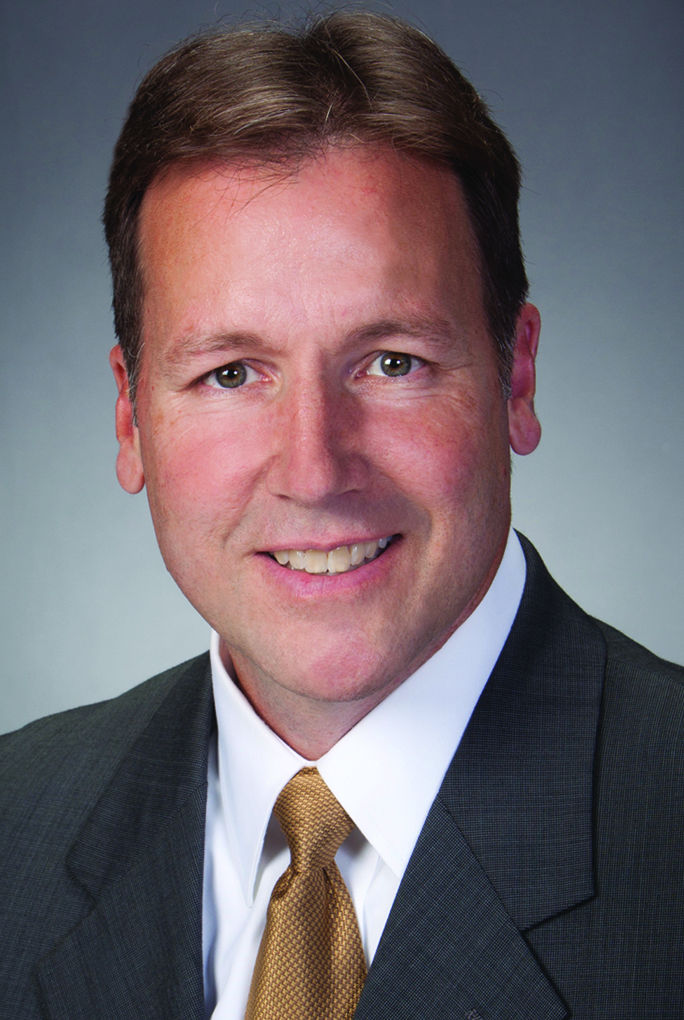
Rep. Allen Andrews
Will Missouri become the 24th state to pass legislation allowing for the medicinal use of marijuana?
While even asking the question a few short years ago would have seemed far fetched, the answer these days appears to be, “well, maybe.”
Back in February, state Rep. Dave Hinson, a St. Clair Republican, introduced House Bill 800 before the House Committee on Emerging Issues. The bill seeks to legalize medical cannabis and create a system for its cultivation and distribution.
Hinson’s 119th district, which covers parts of Franklin and Washington counties southwest of St. Louis, is mostly rural and distinctly conservative — as is he. Elected to the Legislature in 2010, the FFA alumnus is a member of the Missouri Farm Bureau, the National Rifle Association and the First Baptist Church of Arnold.
But conservative credentials notwithstanding, Hinson apparently believes that medical marijuana is a weed whose time has come. Other state lawmakers agree.
After reviewing Hinson’s bill, the panel tacked on a couple of amendments intended to add some regulatory bite and voted to recommend passage. Then, at the end of last month, the House Select Committee on General Laws did the same thing.
Those actions mean that HB 800 is well on its way to the House floor for debate.
All of this is troubling to state Rep. Allen Andrews, whose 1st District — also rural and conservative — includes Nodaway County.
Andrews reaffirmed this week comments he made earlier stating that Hinson’s legislation appears, at least to Andrews, to be the crest of slippery slope leading toward decriminalization of recreational marijuana.
“I have a lot of reservations about the bill the way it is right now,” said Andrews, who fears HB 800 will serve as a legislative gateway for people who want to make pot legal for all adults, not just patients suffering from such conditions as chemotherapy-induced nausea, chronic pain, multiple sclerosis, epilepsy, diabetes, glaucoma and fibromyalgia.
All of those conditions have been treated by the ingesting of cannabis, though the efficacy of pot as medicine is still widely debated.
Andrews admits there are documented cases where the active ingredient in marijuana, tetrahydrocannabinol, or THC, appears to have improved the “quality of life” for chronically ill patients. But he sees problems with passing legislation that would allow those patients simply to eat pot-laced brownies or roll a joint and light up.
Such traditional — and in Missouri quite illegal — ingestion methods make it difficult to control dosages and monitor the drug’s effects, Andrews said.
The lawmaker added that if marijuana, or more precisely THC, really is serious medicine, why not allow its use by patients in pill or liquid form that would be prescribed by a physician and purchased in a bottle at a pharmacy like any other legal, controlled pharmaceutical.
Instead, Andrews fears, HB 800, will pave the way for establishment of a commercial marijuana industry in Missouri where marijuana would be grown and marketed under far less restrictive conditions.
If medical marijuana proponents are serious about the drug’s benefits, he said, they should have no objections to tightly regulated THC in forms that can only be prescribed in accurately controlled dosages.
“But that doesn’t seem to be the solution that they are looking for,” he said. “I think they see this as a gateway to recreational use. I just have a lot of concerns about it.”
Andrews said what he sees as a hidden agenda by medical marijuana supporters is sending “mixed signals” to young people at a time when, he believes, efforts to discourage recreational drug use are more important than ever.
“I think young people may hear about this and think, ‘If marijuana is good enough to be used for medicinal purposes then why can’t it be good for me?’”
But even in a House of Representatives heavily controlled by conservative Republicans — traditional foes of any kind of experimental drug use — medical marijuana that can be smoked or eaten doesn’t appear to be the bogeyman it once was.
“I know (the bill is) picking up steam,” Andrews said. “It’s made it through committee, and it does appear to have a high likelihood of getting to the floor.”
Andrews said he doesn’t think the bill has enough support to get through the Legislature this year for consideration by Gov. Jay Nixon, but he added that he’s surprised by the number of lawmakers, both Democrats and Republicans, who have indicated they’ll probably vote yes.
“Several of my colleagues are for this bill,” Andrews said. “It’s kind of a toss-up.”




