Kawasaki tax plan headed for council
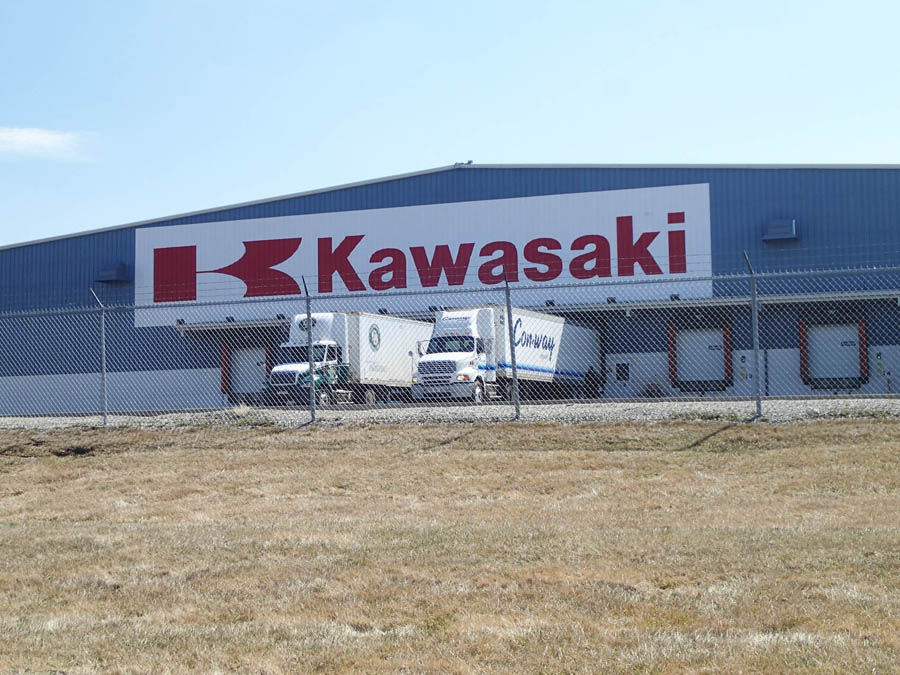
TONY BROWN/DAILY FORUM
The City Council on Monday is expected to vote on an ordinance that would enable a tax abatement plan for the Maryville Kawasaki Motors Manufacturing Corp. plant. Under the proposal, the city would legally own the Kawasaki facility and grounds over the 10-year life of $25.5 million in Industrial Development Revenue Bonds, proceeds from which will be used to finance a major expansion at the small-engine factory.
The Maryville City Council as currently constituted will meet for the last time Monday before next month’s municipal election on Tuesday April 7.
Municipal staff is expected to submit an unusually heavy agenda to the city’s governing board, including an ordinance that would create a tax abatement package designed to help finance a proposed multi-million-dollar expansion at the Kawasaki Motors Manufacturing Corp. plant on the south edge of town. The factory was voluntarily annexed into the city late last year.
Under terms of the proposed agreement, arrived at after months of negotiation between Kawasaki and municipal officials, the city Maryville will technically acquire ownership of the entire plant and lease it back to the corporation for considerations equal to the principal and interest on $25.5 million worth of Industrial Development Revenue Bonds.
Proceeds from the bonds will be used to pay for the 100,800 square-foot expansion, an initiative Kawasaki officials say will create around 30 new jobs. The small-engine factory currently employs about 800 workers.
According to City Manager Greg McDanel, the bonds will be purchased by Kawasaki itself rather than offered publicly.
City ownership of the factory and grounds means that the entire Kawasaki campus will be tax exempt during the bonds’ 10-year term.
However, to prevent various local taxing entities — and especially the Maryville R-II School District — from facing the prospect of steep revenue cuts, Kawasaki is pledging to make lump-sum annual payments equivalent to 100 percent of the property taxes on the existing plant and 50 percent of personal property taxes on fixtures, machinery and equipment associated with the expansion.
Personal property taxes on existing fixtures, machinery and equipment would remain unaffected.
In-lieu-of-tax payments based on new personal property are subject to depreciation and would decrease from a high of $176,704 in 2016 to $18,026 in 2025. In-lieu-of payments based on real property are to remain constant at $256,269 a year for ten years, of which $164,492 would go to the school district, or a little more than 64 percent.
McDanel said the deal is contingent on Kawasaki maintaining a workforce of at least 775 employees over the span of the agreement. Failure to do so, he said, would allow the city to enforce tax assessment at the full amount.
Lesser tax penalties are also an option, McDanel said, should the number of jobs dip slightly below the 775-worker threshold for a brief period.
Moreover, during the 10-year bond term Kawasaki will be obligated to submit monthly reports stating both its number of employees and the average wage those workers earn. In order to stay in compliance with the terms of the tax abatement deal, wages at the factory must remain at levels consistent with the Missouri Quality Jobs Act.
According to figures supplied by the city of Maryville, the in-lieu-of-tax payments over the life of the bonds will total $3.17 million, not counting taxes on personal property (equipment, fixtures and machinery) attached to the existing part of the plant, which will continue to be assessed at the full rate, including depreciation.
Of that amount, $2.1 million will go to Maryville public schools.
Without the abatement, assuming Kawasaki went forward with the expansion, the project would yield $4.15 million in new taxes, of which about $2.8 million would go to the R-II School District.
Additional business before the council next week tentatively includes:
• An amendment to an existing development agreement between the city and Maryville East Side Development with regard to an ongoing retail project on the north side of East First Street near its intersection with the Highway 71 bypass.
Current plans call for the project to embrace a carwash, convenience store, pizza restaurant and a non-profit greenhouse operation intended as a training and employment resource for people with developmental disabilities.
• Consideration of proposed voluntary annexation of a 1.16-acre parcel at the south end of Serenity Loop. The annexation is being requested by Bill and Bonita Ingels, owners of Double “B” Development, for the purpose of constructing several new single-family homes.
• A commercially zoned lot split at 1306 South Main requested by Mary Mart Corporation Vice President Mark Watkins.
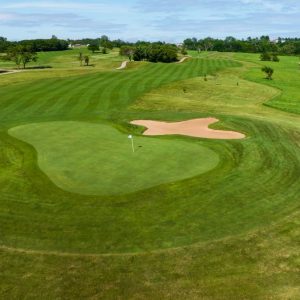
• A memorandum of understanding between the city and the Junior Golf Foundation with regard to the Watson 9 youth golf course at Mozingo Lake Recreation Park.
• A contract with Pierce Lumber & Sand Co. for material and hauling services related to beach improvements at the Mozingo Lake swimming area.
• A contract with Blue Springs Marine for the purchase of a patrol boat for use by Maryville Public Safety officers at Mozingo Lake.
• Discussions with regard to traffic management on West Ninth Street and proposed 20th anniversary events at Mozingo Lake Recreation Park.
On other fronts, Monday’s meeting will be the final regular council session for Councilman Jeff Funston, who declined to run for re-election.
Elected in April 2012, Funston, a retired business owner and engineering project manager, served two previous terms on the council in the late 1970s and early 1990s.
Two council seats will be decided April 7. The other is held by incumbent Jerry Riggs who is seeking election in own right after being appointed to fill the unexpired term of Glenn Jonagan. Other council candidates include Michael Baumli, Jason McDowell and Beth Hawkins.