
Phillip, king of the buffalo
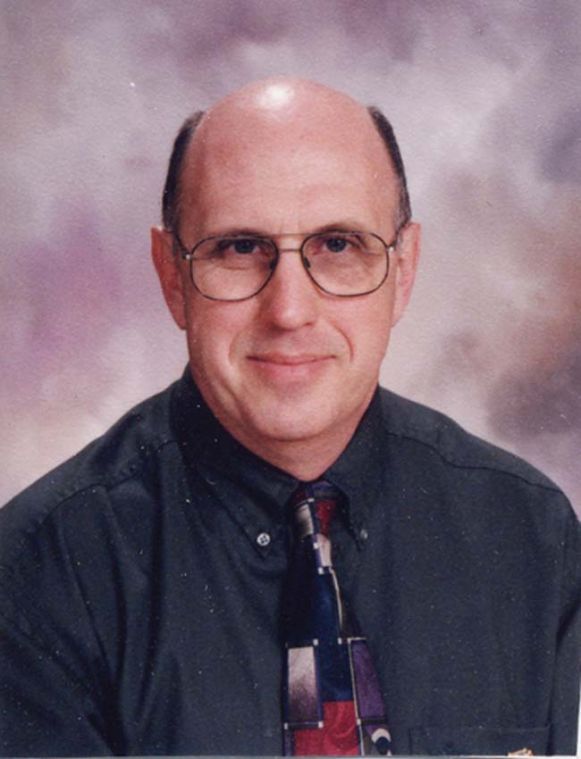
LARRY ANDERSON
Larry Anderson
As an American, you are surely familiar with William “Buffalo Bill” Cody (1846-1917), that durable icon who helped create the bigger-than-life image we have of figures of the western movement, those subjects of novels by the thousands and old television series by the dozens.
Like many Americans living on the cusp of wilderness, Cody came up hard, doing a man’s work at an early age and filling in for a father deceased, in part, from wounds received for speaking against slavery in a place where the notion wasn’t popular.
Bill became a rugged, self-sufficient man with an eye for opportunity and a willingness to accept a challenge.
Cody became many things, but he is remembered best for four endeavors:
1) Pony Express rider at age 14.
2) Army scout, receiving the Medal of Honor though a civilian.
3) Buffalo hunter, a skill at which he excelled with his Sharps single-shooter.
4) Master showman, in which he helped immortalize the western mystique via his Wild West show, which, in turn, made him wealthy and influential and then disappointed and largely broke. He even brought his show to St. Joseph.
Sure, you know about Buffalo Bill and his contracts with the United States Army and the Kansas Pacific Railroad to supply meat to troopers and railway workers.
Luckily, protein on-the-hoof was readily available in the form of bison, the shaggy, near-sighted, slow thinking denizens of the pasture also in demand for their hides, their bones for fertilizer, and their heads for trophies.
The slaughter began. Buffalo Bill alone killed over 4,200 of the harmless creatures. Within a few years, huge herds had been reduced to almost nothing.
Buffalo Bill was many things, but he wasn’t an environmentalist. He did what many Americans did at the time: He exploited the wealth he saw. Opportunity trumped harm.
You’ve heard of Buffalo Bill, but do you know about the Buffalo King?
The Buffalo King was also a westerner, but obscure compared to Cody.
It was the Buffalo King who saved the bison, and he did it without a government program, Hollywood praise, or pressure from those who demand good but do little. He did it because he wanted to and because he knew something special would soon be extinct.
James “Scotty” Philip (1858-1911) arrived in America from Scotland ready to work at an age when kids today would be in middle school. He was a bit of an adventurer, you see.
Philip headed for the plains, arriving in the Black Hills in 1874, around the time the Sioux and Cheyenne were getting cranky over broken government promises and Wild Bill Hickock was distributing bullets in Deadwood. Scotty became a failed gold miner, a supplier of hay to the Army, a ranch hand, a teamster, and a scout among other endeavors, but he saw his future as a rancher and made it so.
Scotty, like Buffalo Bill, was a businessman, and while many were preoccupied with gleaning gold, Philip began accumulating pasture and cattle. By 1898, as a partner in the Minnesota and Dakota Cattle Co., he was branding 20,000 head. He was also married to Sarah Laribee, a Native American who, no doubt, kept her husband cognizant of the way things once were and how they should be.
Scotty, now successful in his chosen land, became concerned about the plight of the buffalo whose numbers were dwindling before his eyes. He gathered and protected a small herd on his sprawling ranch.
He began patiently building up the herd as he did cattle. At the time of his death, the number was around 1,000. These were most of the bison left in America.
Philip became a student of the bison One thing he noticed and wrote about concerned how they survived the plains’ wild winters. He saw that in blizzards the males would form a triangle with the head bull at the point. Inside that perimeter were the cows, and in the center were the calves, protected from wind and snow by the solid, stolid bodies of their parents. And so they lived on.
We can learn too from these ancient animals and their parenting.
When Scotty died suddenly and was buried on the plains, it is said the bison he saved wandered down to the cemetery and watched. I don’t know if that is true, but I prefer it to be.
In doing so much with the ease of an accomplished man, Scotty Philip became an environmentalist whose great contribution to America has been clouded by time. You might give him a thought now and again. Or just wonder at the greatness of simple and quiet men doing good while indifferent to fame.



