City adds regulations to commercial operators at airport
FORUM FILE PHOTO
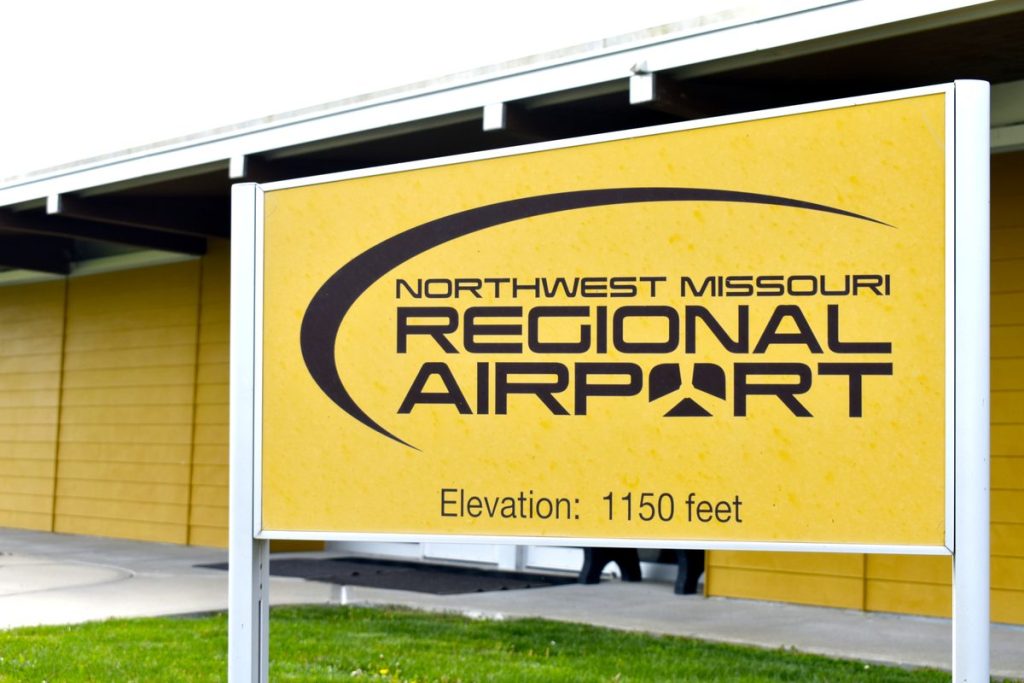
Northwest Missouri Regional Airport building sign 2025
MARYVILLE, Mo. — The Maryville City Council last month approved an ordinance that places regulations on commercial aviation operations at Northwest Missouri Regional Airport, including crop dusters. No regulations were in place previously, which sometimes has led to safety and maintenance issues.
The ordinance approved during the council’s regular March 23 meeting requires all commercial operators to obtain an annual permit, submit application materials demonstrating qualifications and regulatory compliance, and pay an annual fee of $750. It also establishes minimum insurance requirements and indemnification provisions to protect the city. In addition, the ordinance sets operational standards, including designated operating areas, restrictions on ground vehicles and equipment, and specific fueling procedures. Environmental and safety provisions address chemical handling, spill prevention, and cleanup responsibilities.
All of the above address concerns raised by members of the airport board, which approved recommendation of the ordinance in February. During the board’s first meeting after reorganization in April 2025, board members discussed the risks posed by unregulated commercial operations, including having no formal system to know who was using the airport for that purpose. And at the time, there was no designated area for commercial crop dusters to park water and fuel vehicles. Consequently, many were parked as close as possible to the runway, creating safety hazards, and were frequently left there for the duration of the season.
The ordinance passed last month requires a permit to operate at the airport and designates areas where ground vehicles may be parked, prohibiting them from being left overnight. That should also help address maintenance issues caused by the heavy trucks tearing up concrete and gravel on access roads, city officials hope.
One more concern that is not yet addressed is that the commercial operations largely do not purchase fuel from the city. Much of the airport’s funding comes from revenue made on fuel sales.
During the March 23 council meeting, City Manager Ryan Heiland said the city is “working on that.” Previous options discussed during an airport board meeting last year included the possibility of offering discounted fuel to commercial operations to encourage buying fuel from the airport, or outright prohibiting those operators from using outside fuel.
The prevalence of commercial operators, especially crop dusters, at the airport has increased significantly over the past few years, airport board members said last year.