
A Word from Woehlk: No one today can say, ‘I did not know’
A Word from Woehlk: No one today can say, ‘I did not know’
In an address to leaders of international news agencies from across the globe last week, including the Associated Press, Pope Leo XIV gave a strong defense of a free, independent press and its importance to democracy — not the first time he’s done so in his short tenure so far as God’s press secretary.
“It is a paradox that in the age of communication, news and media agencies are undergoing a period of crisis,” he said during his speech. “Similarly, those who consume information are also in crisis, often mistaking the false for the true and the authentic for the artificial.
“Yet, no one today can say, ‘I did not know.’”
I just can’t get that line out of my head.
I haven’t been a practicing Catholic since college, which puts me in the same boat as the vast majority of American Catholics: According to a Pew Research survey released earlier this year, only 29 percent of Americans who identify as Catholic actually attend Mass each week.
Still, I’m glad I was raised Catholic so that at the very least, I have something in the back of my mind to always feel vaguely guilty about. Like George Costanza, I can’t say I’m much of a believer in God — except for the bad stuff. If there is an afterlife, I have no illusions about where I’m going and why. God was pretty clear about the rules for entry.
At the end of his address, the pope quoted Hannah Arendt’s “The Origins of Totalitarianism”:
“The ideal subject of totalitarian rule is not the convinced Nazi or the convinced Communist, but people for whom the distinction between fact and fiction and the distinction between true and false no longer exist.”
I think I’ve had trouble getting Pope Leo’s message out of my head because it fits this particular moment so well. We most certainly live in a post-truth world, where even Catholics — especially those 29 percent who go to Mass on Sundays — aren’t guaranteed to think much of the pope. It’s enough to make reasonable people cover their ears and shut their eyes. But try as we might, the age we live in doesn’t allow for blocking it all out.
And, like many of you, I’m sure, I do try to block it out. Frankly, I’d just rather not think too much about what’s happening, or my part in it.
But despite my best efforts, I thought about Pope Leo’s message when I watched the video of a Presbyterian minister in Chicago, his hands open and spread, shot in the face with a pepper ball by an Immigrations and Customs Enforcement officer from a rooftop as casually as if nothing had happened at all.
I thought about it when I read accounts of families — U.S. citizens and noncitizens, children and adults, clothed and nearly naked — pulled from their beds at gunpoint by men in masks, dragged to the street in the night, handcuffed and detained for no reason other than they did not look like me.
I thought about it when I read of masked ICE agents shooting a woman and leaving her to die — and when I watched the video of masked men in fatigues dragging a screaming woman from her SUV in a school pickup line.
I thought about it when I read the horrifying details of the inhumane conditions at for-profit detention camps with cute names like Alligator Alcatraz where children competed with adults for what little food there was and didn’t have access to clean water or their medications, where some died due to the inhumane conditions, and from which hundreds of people have disappeared from government records — their whereabouts and status unknown to all, especially their families.
I think about it every time I get chills and a sense of despair for the few seconds I dare to think of what it would be like if every cruelty perpetrated against me were greeted either with cheers or a deafening indifference, if whether I lived or died were completely immaterial.
I think about it every time I look around at so many who will be proud to stand before a higher power and answer that it is all an unfortunate necessity, or even just, right and good.
I think about it every time I look at an American flag, and wonder what it stands for anymore.
I think about it every day that I go on about my business as if there is nothing I can do, or worse, nothing I should do.
And most of all, I think about it in those very few unwanted and vulnerable moments that inevitably creep into our minds every once in a while, when I wonder what kind of acceptable answer I can possibly give when my time comes.
No one today can say, “I did not know.”
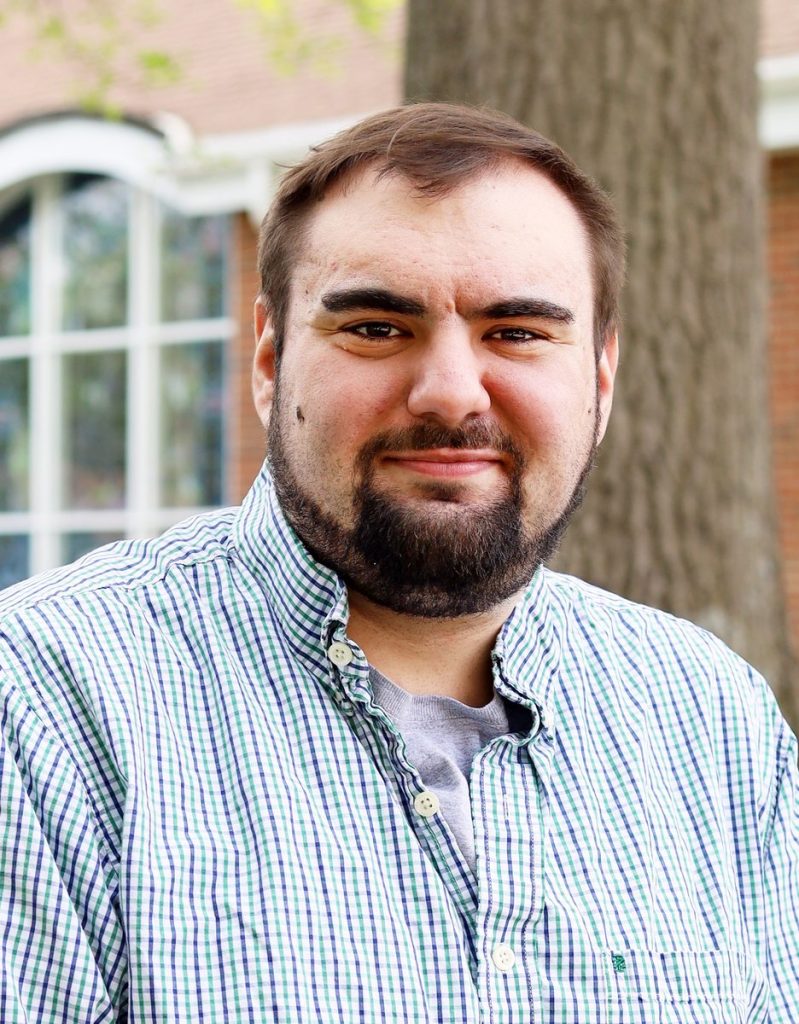
Geoffrey Woehlk is the news editor of The Maryville Forum.



