Maryville teacher one of 44 in U.S. part of Holocaust fellowship
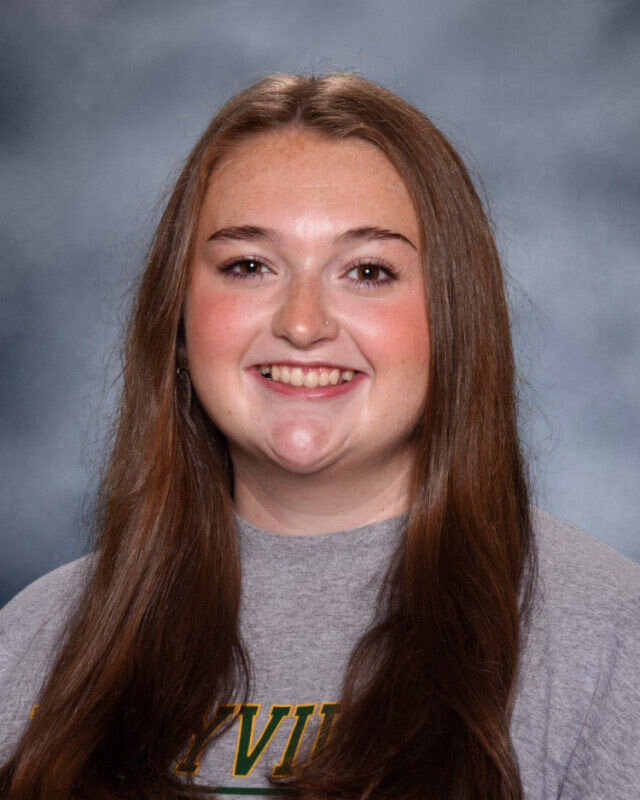
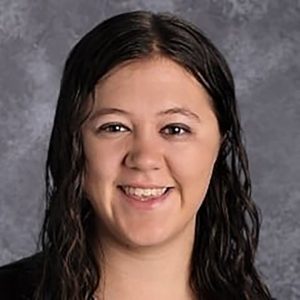
Brianne McDermott Maryville High School History Teacher
MARYVILLE, Mo. — A Maryville High School teacher was one of only 44 nationwide selected by the Auschwitz-Birkenau Memorial Foundation for the highly competitive Auschwitz Legacy Fellowship, a yearlong program that aims to equip American high school teachers with the knowledge and resources to teach students about the Holocaust.
Brianne McDermott, a history teacher who teaches an elective on the Holocaust, was the only Missouri teacher selected from about 90 applicants, she said, by the Midwest Center for Holocaust Education, along with one from Kansas.
Following a rigorous six-month online training program, the 44 teachers spent a week in Poland, visiting historical sites in Warsaw, Krakow and Auschwitz. The fellowship program also provides teachers with resources and tools to use in their classrooms.
“Looking at statistics today, there’s a concerning amount of kids that don’t know a whole lot about the Holocaust,” McDermott said. “And so (I’m) kind of making it a passion and my mission to make it known that this did happen, and it didn’t happen that long ago.”
A 2022 American Jewish Committee survey found that only 53 percent of Americans over 18 answered correctly that approximately 6 million Jews were killed in the Holocaust, and 34 percent incorrectly said that Adolf Hitler came to power by overthrowing the German government instead of by democratic election.
That’s part of the reason McDermott’s Holocaust class starts with the end of World War I, the erosion of the Weimar Republic and the Nazis’ rise to power.
“I do think there is a sort of urgency just to teach this topic, because, like I said, more and more survivors are passing away, and I think a lot of people have this misconception that, you know, Adolf Hitler just woke up one day and randomly decided that this is gonna happen,” she said. “(But) decades of dismantling a democracy and dismantling a nation that had a constitution and that had protections for its citizens (came first).
“It’s very important for anyone across the world to know that this is possible and it has happened, and that here are the things we can do to prevent it from happening again.”
The horrors of the Holocaust are further and further removed from today’s generation. According to a 2025 report by the Conference on Jewish Material Claims Against Germany, only about 34,600 Holocaust survivors are left in the U.S. And it’s not possible for every American high school student to make the trip to sites like Auschwitz, where around 1.1 million people died in the less than five years the camp was in operation.
But the Auschwitz-Birkenau Memorial Foundation created the fellowship in 2022 to annually bring American teachers to historical sites in Poland where they could learn from experts and historians, and hear directly from survivors themselves — then bring their experiences back to each generation of students they teach.
“You know, we read survivor testimonies, we watch documentaries, we watch videos of survivors talking about living through it — and that is all great and wonderful, and that’s important,” McDermott said. “But I also think when I connect with students, and I have the relationships with students, it does make an impact of, ‘Oh my goodness, Miss McDermott was there. Miss McDermott walked through gas chambers.’
“… This happened in our world, not that long ago.”
About 90 percent of the 1.1 million people who died at Auschwitz were at the Birkenau subcamp, according to the Auschwitz-Birkenau State Museum. Visiting that site is one of the experiences McDermott will try to convey to her students.
“Birkenau is huge,” she said. “I mean, the rows of where you can see the barracks — it just kept on going and going and going. And I don’t think I will ever forget that feeling of standing in the middle of the selection platform where they were having us stand and then just seeing how big the camp was and trying to comprehend how many people were there, and how many people suffered.
“I think that is something that will stick with me forever.”
In addition to focusing on the concentration camp, the fellowship also helped teachers learn more about the Jewish culture in Poland before, during and after the war. McDermott said that’s an important element to keep at the forefront of students’ minds, “making sure the students are seeing them as fathers and mothers and schoolchildren, and what Jewish culture and Jewish life was like before the war and before the Holocaust.”
All of that can seem far removed from a classroom in Maryville, Missouri. But McDermott said the lessons of the Holocaust are important and applicable everywhere to ensure it isn’t repeated.
“I think the main thing is just this concept that, this did happen, and it can happen again,” she said. “That we as human beings have a duty to make sure we treat fellow human beings with dignity and respect, and that if we see marginalized groups in society, to step up and do your part to be a good human being and treat others with the humanity that they deserve.”
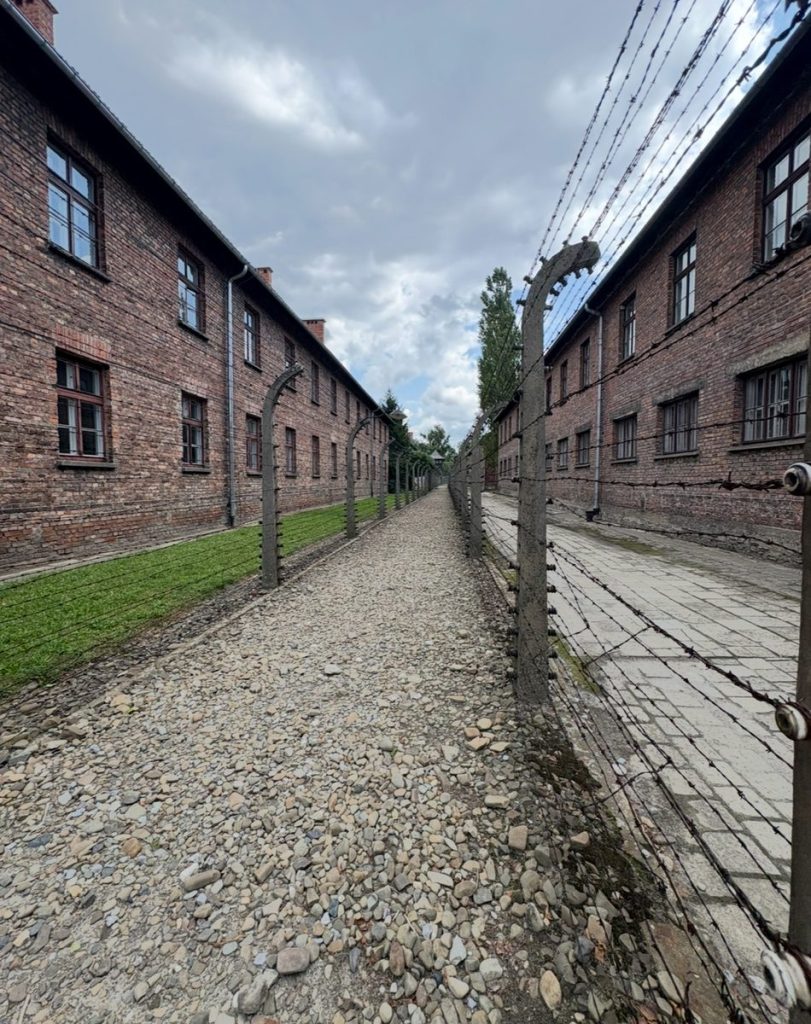
SUBMITTED BY BRIANNE MCDERMOTT
The former military barracks at Auschwitz I were first used for Soviet prisoners of war before the Birkenau subcamp was constructed in 1942, the site of about 90 percent of the 1.1 million deaths at Auschwitz.
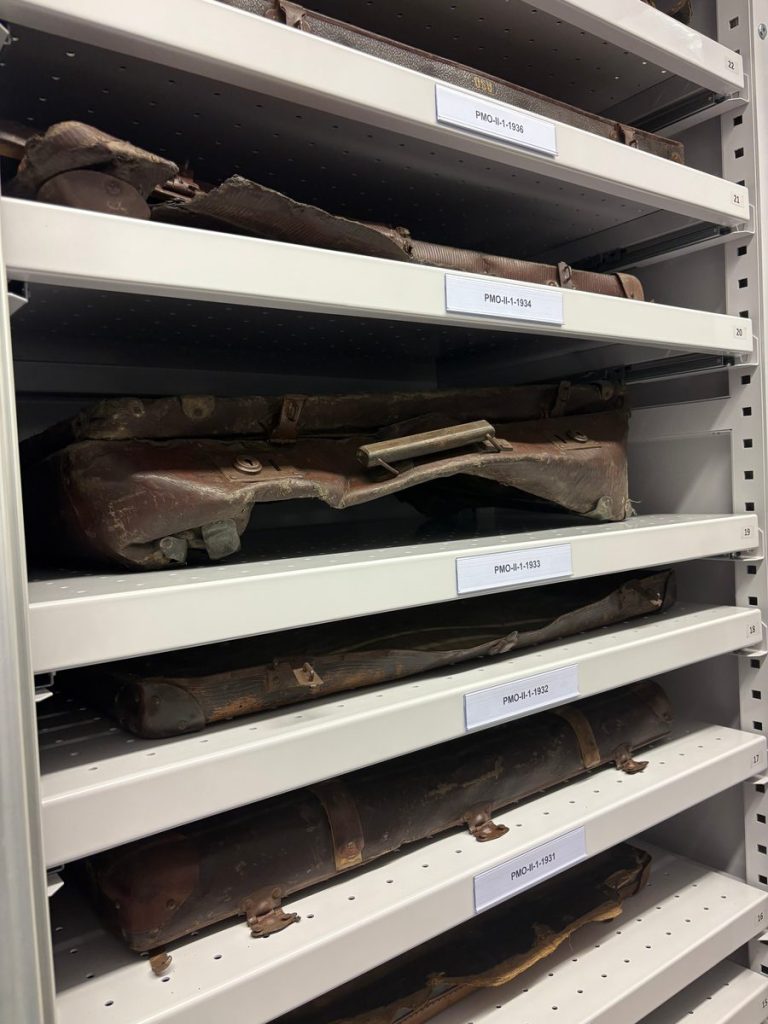
SUBMITTED BY BRIANNE MCDERMOTT
The suitcases pictured belonged to people imprisoned at the concentration camp and had not yet been prepared for display in the museum.
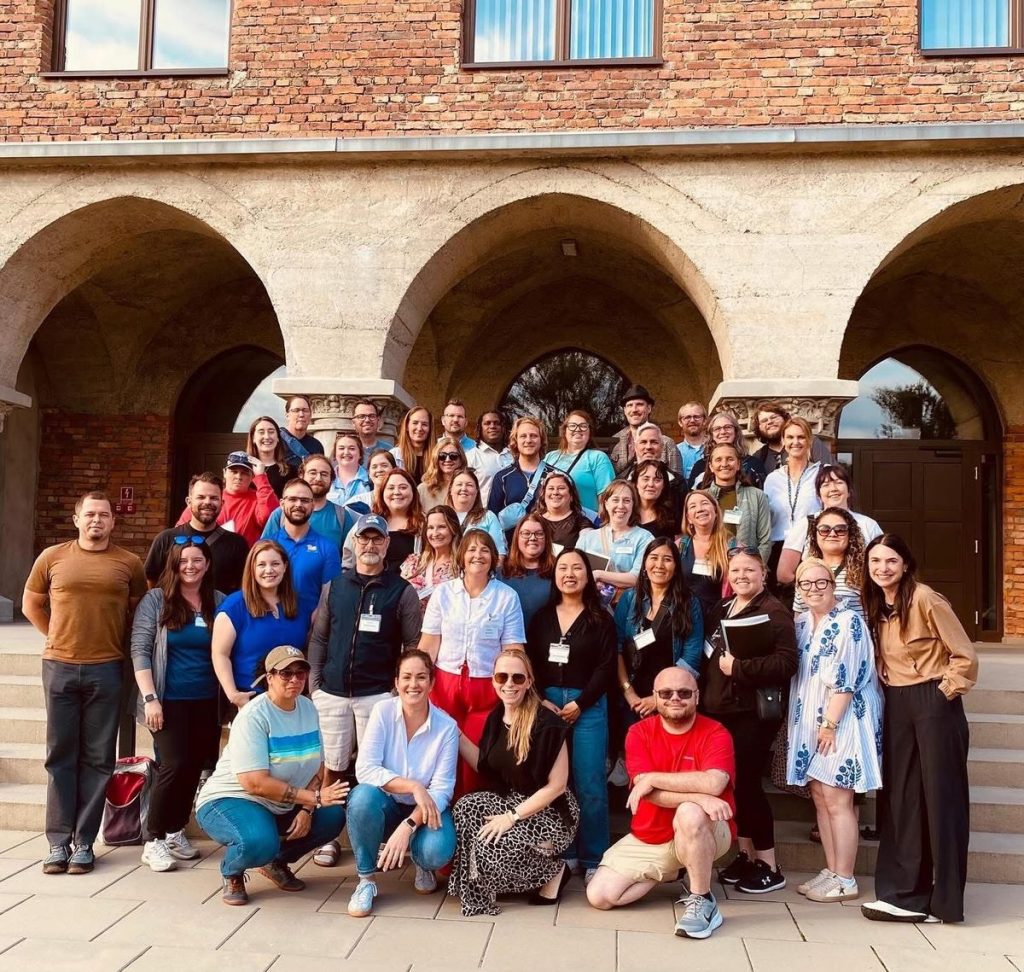
SUBMITTED BY BRIANNE MCDERMOTT
Brianne McDermott, a history teacher at Maryville High School, was one of 44 nationwide selected by the Auschwitz-Birkenau Foundation for its highly competitive Auschwitz Legacy Fellowship. McDermott, third row from the top and second from the left, toured Auschwitz and other sites to help teach about the Holocaust.