The Pickering Horse Show through the years
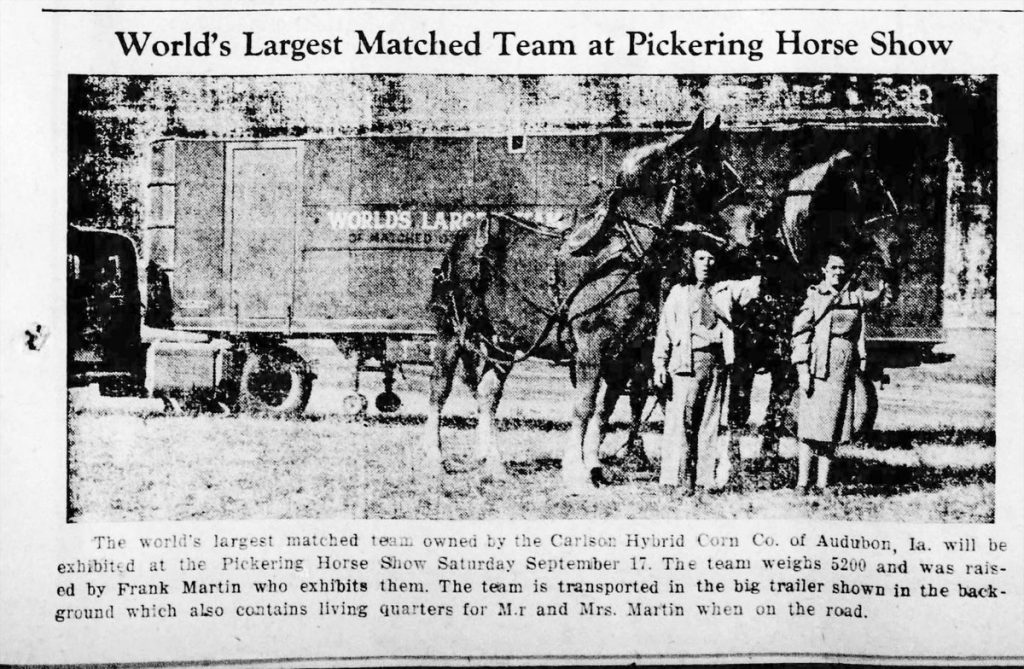
THE HOPKINS JOURNAL, SEPT. 8, 1949, SUBMITTED VIA NCHS
Historical Tidbits 1
The Pickering Horse Show began in Pickering, Missouri, on Oct. 13, 1934. As the story goes, a group of townsmen got together at Alva Lett’s drugstore and decided that Pickering needed a horse show. It is unknown who these townsmen were or why Pickering was chosen for the horse show. This informal agreement meant that there was not an official governing board during the first year that the event was held.
Called the Pickering Horse and Mule Show in its first year, the event was much more than a horse show. The morning started with a pony show, and then the Maryville High School band performed before a late morning track meet took place. The afternoon featured a horse and mule show in 21 different classes. The evening included a tug-o-war, another band concert, a basketball game and other free entertainment. By the second year in 1935, the event had expanded further to become more of a community fair, with a parade and prizes for fruit, vegetables, flowers, fancy work and baking categories. However, horses and mules were still the primary focus of the event with 156 horses and mules shown that second year.
By 1938, $684 in prizes were awarded with $515 allocated for the horse and mule categories, $90 for the horse and mule pulling contests, $61.75 for the farm exhibits, and $17.25 for the home products categories. While these seem like small prizes, $684 in 1938 is the equivalent of $15,000 today! The prizes must have proved to be an attraction, because winning exhibitors came from 16 different counties that year. Just one year later, in 1939, the event brought 6,000 people and more than 500 horses and mules to the small town of Pickering with a population of just 300.
In 1941, the horse show included a pageant for the first time. Perhaps in recognition of the growing international tensions as the world found itself in another war, the locally written performance was titled, “The Good Neighbor Policy Between the South American Republics and the United States,” and featured a cast of 100 people. Once the U.S. joined the Allied war efforts, the Pickering Horse Show Association halted the event from 1942 to 1945, though they did purchase war bonds worth $1,400 in 1942 to support the war efforts. The horse show returned in 1946 in much the same format as its pre-war years, and local newspapers said it soon exceeded the success of its earlier years.
Now in its ninth decade and quickly approaching its 90th year, the Pickering Horse Show still takes place annually. While it no longer has the same focus on the horse and mule show categories, it still includes riding events, wagon rides and a draft horse pull.
The Pickering Horse Show is just one part of Nodaway County’s rich histories in horse raising, breeding and racing. Learn more at the Nodaway County Historical Society Museum where we have an entire room devoted to this local horse history!
The museum is open March to December on Tuesdays to Fridays from 1-4 p.m. and on the second Saturday of each month from 9-11 a.m. We also host monthly programs and are free to the public. Upcoming events include an ice cream social ($5 for a serving of homemade ice cream and pie!) and an open house at the historic Caleb Burns House, both on Saturday, July 12, from 2-4 p.m. during the Nodaway County Fair.
At 1 p.m. on July 26, attend a program and exhibit opening about local artists. The museum will be open that day from 1-3 p.m. for you to explore some impressive local talent from years past.
In early August, we will have a program on Emancipation Day, a celebration held by African Americans in the county from the 1870s into the 1930s. That event will be Monday, Aug. 4, at 7 p.m.
Learn more about the museum’s work on our website, nodawaycountymuseum.com. You can contact us at [email protected] or by calling 660-582-8176.
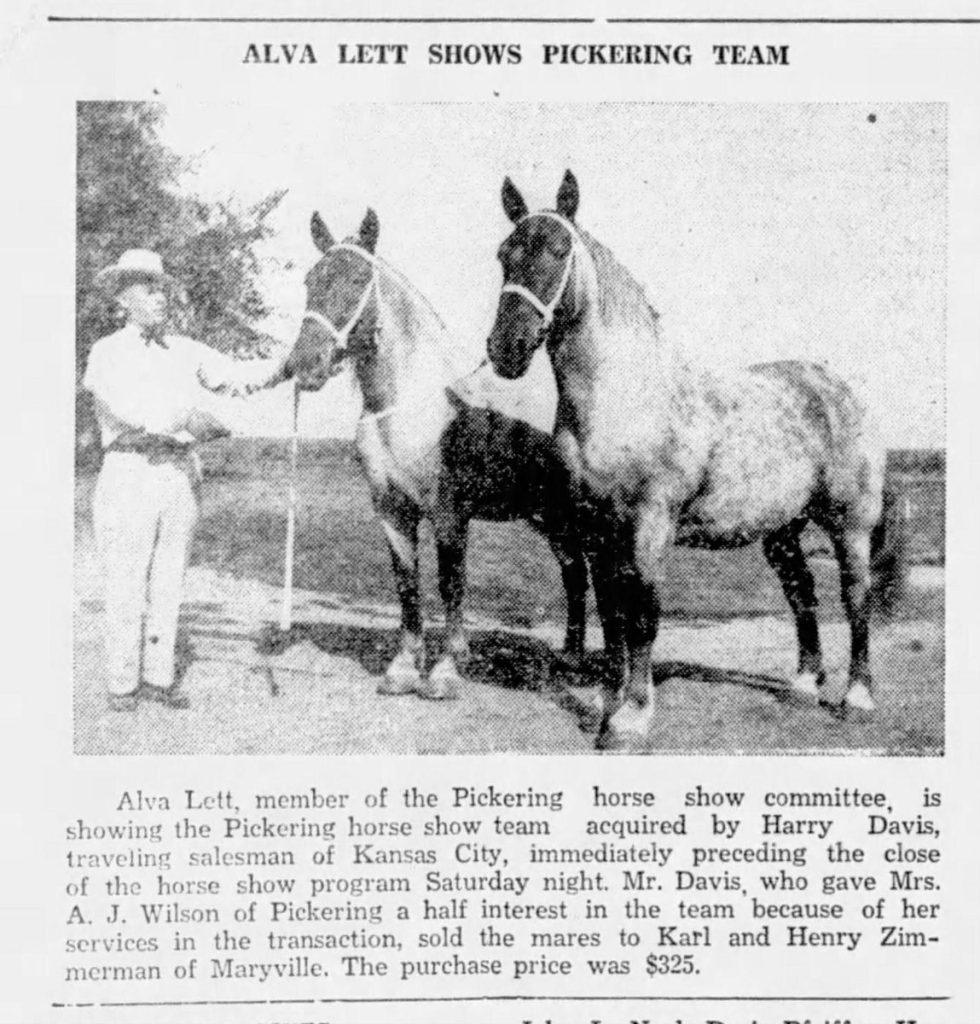
NODAWAY COUNTY TRIBUNE, OCT. 10, 1940, VIA NCHS
Historical Tidbits 3
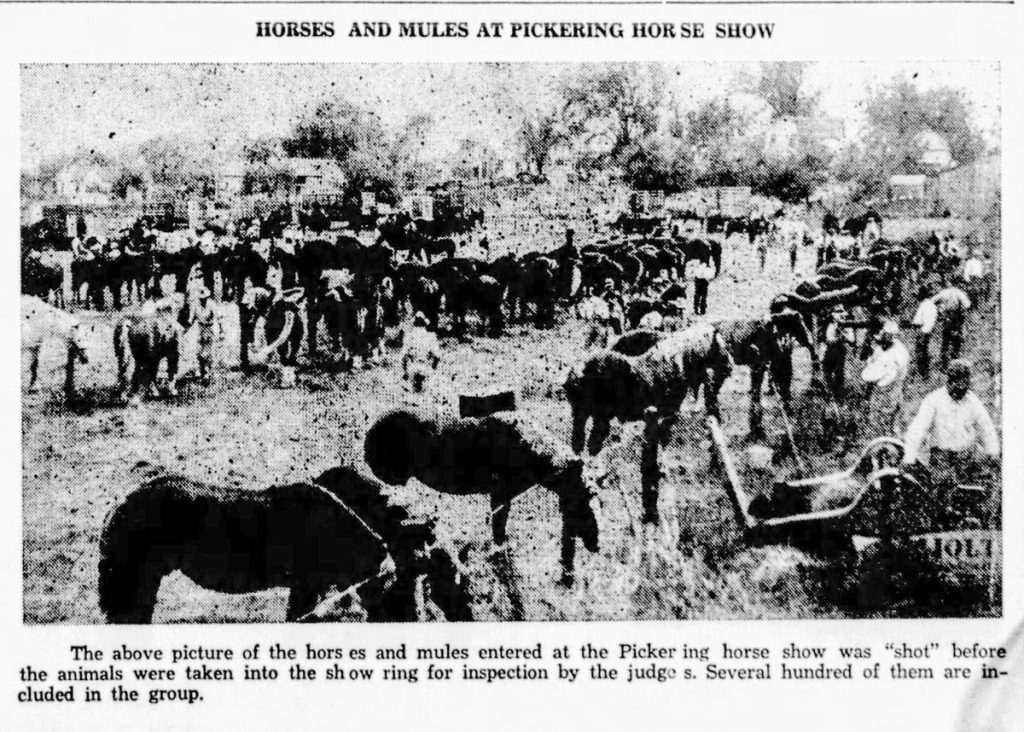
NODAWAY COUNTY TRIBUNE, OCT. 12, 1939, SUBMITTED VIA NCHS
Historical Tidbits 2