The tragic fate of Omaha Charley
SUBMITTED BY THE NCHS
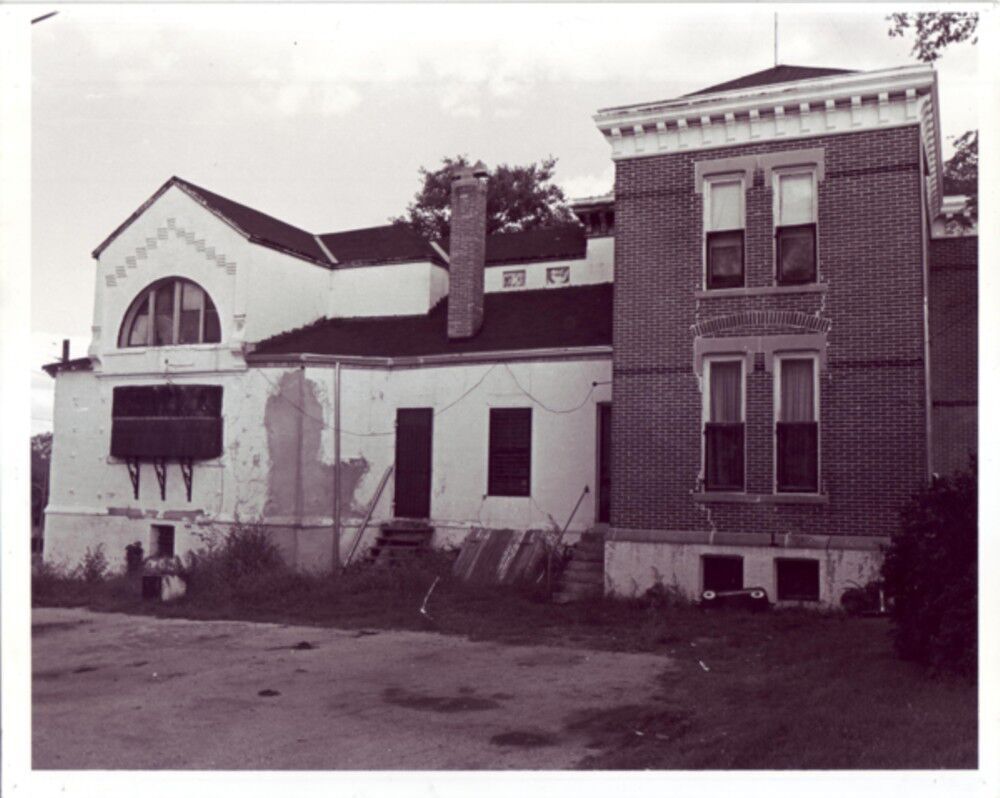
This is the squirrel cage jail where Omaha Charley was held prior to his lynching. It is no longer standing. Image from the NCHS Museum.
This month, the Nodaway County Historical Society Museum would like to present you with the story of a desperado from Maryville who led a life of crime and met a tragic fate, as well as the history of mob violence in Nodaway County.
On the night of Dec. 9, 1884, at around 1 a.m., a crowd of 25-50 masked men dragged Omaha Charley, a local man with a violent history, from his jail cell and lynched him from the bridge over the ravine on East Fourth Street. The event marked the first time in Maryville’s history that citizens bypassed the legal system and took justice into their own hands.
Omaha Charley, whose real name remains unclear, was a heavy drinker known for violent outbursts, particularly when intoxicated. He had been involved in several violent incidents, including the 1879 shooting of John Mahan, for which he served time in the Missouri State Penitentiary. He was pardoned by Governor Crittenden in 1884 after a petition from the governor’s daughter, Carrie, who had formed a close bond with Charley during his incarceration. Tragically, she died soon after, and it is said her dying wish was that he be freed.
After his release, Charley returned to Maryville, but his criminal behavior continued. In December 1884, Charley shot a young man, Hubert Kramer, during an argument at Hilgert’s Saloon. Charley was arrested, but within days, a mob gathered outside the jail, demanding his release. Despite Sheriff Anderson’s efforts to keep control, the mob overpowered him, and Charley was dragged to the bridge, where he was hanged. Charley’s last words were reportedly, “My God,” before he was dropped from the bridge. The mob continued to raise and lower Charley over the bridge to ensure his death.
The lynching sparked controversy within the community. Many were horrified by the mob’s actions and felt it was a dangerous precedent for the town. The Nodaway Democrat condemned the lynching, emphasizing that Charley, despite his crimes, was entitled to a fair trial. However, some believed the mob acted out of personal vengeance, particularly given Charley’s violent past and the involvement of Hubert Kramer’s cousin, Michael Hilgert, in the mob.
Charley’s body was left hanging for over an hour before being discovered. He was buried in a potter’s field with no tombstone given. His obituary was a single word: “died.”
The lynching remains a stark reminder of the dangers of taking justice into one’s own hands and the violence of mob mentality. The lynching of Omaha Charley is just one of the grisly incidents in Nodaway County’s history. Learn more about this more violent past by visiting the Nodaway County Museum. The museum is located at 110 N. Walnut Street in Maryville and is open March to December on Tuesdays to Fridays from 1-4 p.m. and on the second Saturday of each month from 9-11 a.m.
Upcoming events include an Afternoon Tea for $10, with reservations required in advance. The tea is Sunday, April 27, at 2 p.m. There also is a program about suffrage and voting rights in the county, as well as a special exhibit about the recently acquired Alma Nash collection, on Saturday, May 10 at 11 a.m. This program is part of the Smithsonian Museum on Main Street exhibit, sponsored by the Missouri Humanities, which will be on display at the Rose Theater.
Learn more about the museum’s work on our website, nodawaycountymuseum.com. You can contact us at [email protected] or at 660-582-8176.