McDanel reflects on 13 years leading Maryville
FORUM FILE PHOTO
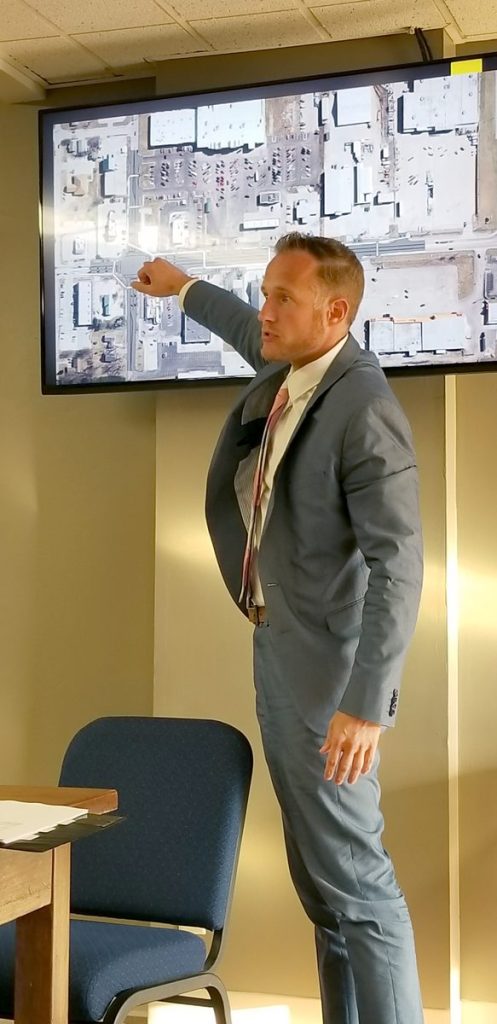
During a July 2018 City Council meeting, City Manager Greg McDanel explains preliminary plans to widen turn lanes and improve intersections as part of the South Main Corridor Improvement Project. At the time, the city was gearing up to apply for a federal BUILD grant to help pay for the project.
MARYVILLE, Mo. — Last week, outgoing City Manager Greg McDanel sat down with The Forum for a ranging interview reviewing his 13 years as Maryville’s city manager, touching on the calling to public service, to major crises, to how the city has changed over that time.
“I think we have a team of dedicated employees who want to look for ways to say yes first before we look for ways to say no,” McDanel said of the city’s public servants, and said that is a key reason for the city’s growth and success and why Maryville can continue to do the same well into the future.
McDanel’s last official day as Maryville city manager is Friday.
“It’s a really special place,” he said.
Below are excerpts from the interview with The Forum that have been edited for clarity and style.
During your 13 years as city manager, you faced a few unprecedented crises, starting with the Daisy Coleman case which started getting national attention in 2013.
It was overwhelming, for sure. All I could do was rely on the public relations contacts that I had made in my professional experience. We hired a PR company and we worked behind the scenes to just make sure that we tried to let the justice system do what the justice system needs to do while we tried to keep community integrity on a national level. And so that was a very difficult task, letting the world know that there are still good people here in Maryville and that we’ve got a lot of good things happening.
Did that shape how you approached future crises?
I absolutely think it has. It’s given me the experience to know that there are incidents that happen in any community in the United States, both positive and negative, and sometimes you just never know what element in that is going to become more of a community issue and start getting feedback from the world.
And when that happens, it just brings in another dynamic to my job, into making sure that our staff can continue operations and that our elected officials are well prepared with what they need to make public comment and to keep, again, the integrity of our community as high as possible during those incidents. Yeah, that was a very difficult time and situation for the community and definitely learned a lot going through that.
Then several years later, the COVID-19 pandemic hit, putting a lot of pressure on local public officials. Did that make you start to regret your life choices?
I would say there were probably a lot of public servants that regretted their life choices during COVID, not just municipal, but hospital and school district, education. (laughs)
How did you navigate the pressure of the pandemic at the local level?
In hindsight, I believe municipalities across Missouri were forced to step up. I think we had limited guidance at the time from the White House, we had limited guidance from the governor. … I think what you had was you had guidance on the federal and state level that wasn’t consistent with the local anxiety.
Our two major community partners of Northwest Missouri State University — who has a huge responsibility to a very big portion of this community — and our local hospital team both reached out to the city and (the hospital) said, “we need help to get our hospital prepared. If this hits us in this amount of time, there are gonna be a lot of unknowns.”
And so, how to navigate those unknowns with limited guidance was, I mean — did we make mistakes? Absolutely. Are there things we would do differently? Absolutely. But I think everyone making those decisions, including myself, just wanted this community to be as protected as possible and that we wanted those fatalities and (cases to be limited). You know, whether we did a good job or not, I guess that’s (for somebody else) to debate, but we navigated it as best we could and I hope communities don’t have to be in that position again.
Overlapping with that was the Missouri Department of Natural Resources shutting down Mozingo Lake in January 2020 because of high levels of algae. What were you thinking at that point?
Obviously Mozingo shut down is a huge concern for us from a recreation standpoint, but the concern was drinking water and our limited backup supplies. So, how serious is this issue? Should we be worried about the health of our community? And once we answer that question, then if it’s more of an aesthetic quality issue — like we identified — and that it’s more of an annoyance versus a health issue, how do we develop a plan to attack that? And, certainly … we all became experts in algae really fast, and none of us had that on our to-do list.
How did you become an algae expert basically overnight? How does that happen?
I think it goes back to what I do believe I’m good at, which is connecting resources. And I think city managers do that, right? So I love to joke with my department heads that I know a little bit about everything a lot about nothing. And I mean that because we’ve got experts in law enforcement, we’ve got experts in fire service, and so my job, as I really see it, is to try to help them be more successful in the things that I can control: council interactions, media, those kinds of things — contracts, legal stuff. But if I don’t have those answers, then it’s my job to find them.
So we were able to … really identify HDR as a premier, national leader in this exact problem. And we knew that they would have the resources that if things went into a new water treatment plant or went into lake dredging or whatever the solution was, that they would have that experience somewhere in their company bench. And they have absolutely stepped up and provided that every step of the way. So, again, I can’t say we knew a lot about algae, but we certainly got educated pretty quickly with the resources that we had.
Much of your job is dealing with disgruntled members of the public. For a while during the beginning of the water crisis, City Council meetings had to be moved to the community center to fit in all the people who often came specifically to berate you in particular. How do you deal with that?
You know, you always hope that when citizens attend a council meeting, that it’s positive, community-minded conversation. But, you know, those residents were there with an appropriate complaint, and that appropriate complaint was regarding water. And when you pay for that water, I think there’s an expectation that it should meet the standards that we want to see. I think all of that just led to a real identification of the real problem, which is the age of our treatment plant — the age and technology, and the fact that it wasn’t designed for the source water.
I think you just learn a lot, and I think we learned a lot through the citizen interactions, I really do. It’s never bothered me if we got a room full of citizens who are passionate about an issue, positive or negative. It’s never bothered me; it’s part of the process.
How do you become resilient to that kind of thing?
I think just through experience. But again, a good city manager also tries to set the tone, and you know, you want your pilots to be calm in the air, right? You want to be calm in the face of challenges or opposition, and, certainly, I think city managers are the same way.
I think it’s just part of public service. And while I’m certainly not comparing myself to a law enforcement officer that runs into a school or a firefighter that runs into a burning house, a good public servant doesn’t hide from that opposition or that interaction, right? So I think it’s good for us to walk into those situations and be prepared for the public input process. And sometimes that is negative in what we do, and that’s OK. Because they’re there wanting their issue to be solved, and I think we’ve been able to solve quite a few issues.
It certainly doesn’t seem like you shy away from answering questions from the public or talking with people, even if they’re hostile.
I think at the core, that’s my responsibility. I think a good city manager’s responsibility is to be honest, not only to the public, but to be honest and transparent to elected officials to help them make decisions. Theoretically, I’m their most senior, trusted adviser, so they need to hear the truth from me, whether that’s bad or good.
And that’s the same mentality I’ve tried to take with the public — is that, hey, it may not always go well, we can sit in a room and agree to disagree, but here’s the facts that I have in my decision-making realm and I wanna know how you feel about it. And hopefully, most of the time, we can reach some sort of mutual understanding of at least our positions.
And I think that goes a long way when interacting with citizens, as opposed to a cold approach, a “this is the way it has to be” kind of thing.
After dealing with a lot of adversity from the public at times, it was maybe a little bit surprising to see such an overwhelmingly positive reaction to your time here when you announced your departure.
It surprised me too. Some of the people who always told me they’d help me move haven’t started helping me pack yet! (laughs)
No, but I think when you step back and look at the last decade, I think it has been a very productive piece of our history as a community. Nobody’s gonna agree with everything we’ve done — including us. There are things we would do differently, absolutely. But in the grand scheme of things, we had a plan that was developed the first year I got here and we have moved through that plan with intentionality, which is what a good comprehensive plan and community should do.
And what’s interesting about all of this coming full circle is, interim city manager Ryan Heiland is getting ready to start that plan again. So he’s starting that next vision of this community, which just kind of, ironically, times well with this situation.
In City Council meeting packets, each item on the agenda has a report that includes how it links back to the comprehensive plan to show how it works toward accomplishing the goals in that plan. Was that already institutional here when you arrived?
No, so, you’ve hit on something we talk about in staff meetings all the time. When I got here in 2012, there wasn’t a lot of formality to the meeting packet as far as, like, staff reports. And that’s perfectly fine because a lot of communities don’t have that. But we created kind of a more standard form so that every item has the same general information. And we added that it should relate back to the comprehensive plan or at least identify how it does or how it doesn’t. …
And I think that intentionality of doing that forces a few things: It forces staff to analyze that recommendation a little bit further before it’s presented to council. It provides the council with more information to make their decisions, but I also think it provides a heck of a lot of transparency for the public, for the media — that’s our opportunity to convey our message of what’s important to our elected officials and community.
That process didn’t exist before I got here, and definitely I think it’s something that will continue after I’m gone, is that Council Action Report format — the importance of making sure things are buttoned up for the council meeting in a very professional way.
Your first hire in 2012 was Assistant City Manager Ryan Heiland, who will serve as interim city manager.
Ironically, Ryan and I overlapped in the same geography program for a year, I believe, while we were in school for undergraduate. And I did not know him whatsoever. … It was in June of right after I got here, I had the ability to hire a new ACM position — that position was vacant when I got here, so it was my choice to hire, which I appreciated from Council at the time.
And we did a national search, and we had I believe 40 to 50 good candidates. And people with some Maryville experience bounced up pretty quick, and Ryan had been in Phoenix and Mesa, and he was back in Iowa with Clive, so I knew when we brought him in for an interview that he would be the selection just from his temperament and his creativity. He likes to joke that a lot of people don’t even know we have an assistant city manager because I’m sometimes in the spotlight. …
But he has been involved in everything we have done since Day 1, and so he has just as much, if not more, knowledge about all the things we’re doing as I do. And we’re gonna work really hard to make sure this is a smooth transition to whatever’s next, to whatever council decides.
What was the most challenging period as Maryville city manager?
Because it’s more fresh, I would say COVID. … I learned a lot in the other experiences for sure, but COVID was one where it was so rapidly changing and what worked last month was not appropriate the next month. And then when the feds and the state moved the bar in different directions, then we have to adjust — and doing all that with community partners that are having the same challenges with a different set of circumstances. When we limit gatherings, how does that impact the local volleyball game at the high school?
So that was just a constant ebb and flow of — how do you even get to anything else when that’s a life-and-death situation that you can make decisions on that impact that one way or the other?
How about a particularly good day?
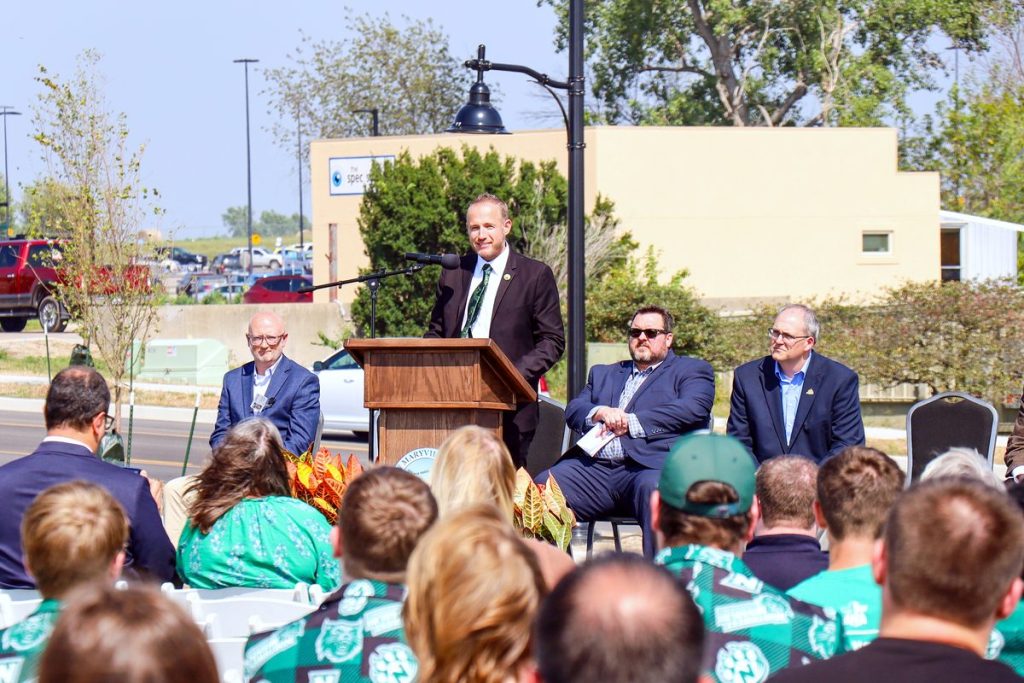
I’ve had a lot of those, so that may be more difficult to answer than the other question. The grand opening for the event center. The ribbon cutting for South Main Phase I. Just when you’re able to step back and have a moment of, “wow, it took a lot to get here, and a lot of people.”
South Main, in 2012, the chamber of commerce and Nodaway County Economic Development held a joint meeting at the Holiday Inn. I was on board for maybe a month or two at the time. They invited all the businesses in, and they were talking about a transportation district where all the businesses would pay for South Main improvements on their own. And that didn’t go well. (laughs) …
But I think it really set the tone for, if we’re gonna tackle South Main, it’s gonna have to be in a different format. And maybe we don’t know how we get there, but it’s our top priority, so let’s just move forward. So we moved forward with the study, moved forward with the CIP (Capital Improvement Program sales tax) renewal, moved forward with an app(lication) and the grants and those kinds of things.
So to see that all come to completion and be standing there to cut a ribbon after 10-plus years of working on something? It speaks to, unfortunately, sometimes how long municipal improvements take. But we also acquired $16 million from the feds to help do it. So anyway, that’s a really proud moment, for sure.
How has Maryville changed since you started here?
My opinion would be that maybe we’re a bit more hopeful that we can achieve other things. … I’m sure people in Maryville have heard it before, but early on, we would all sit in meetings where ideas would come up, and there would undoubtedly be someone that says, “that’s too good for Maryville.” Crazy to hear that, and to hear it out loud from a citizen — “it’s too good for Maryville.”
I think there’s this barrier of thought that rural communities can’t do a pedestrian alley, or some other large-scale task. And I think we’ve proved that wrong. I think that we don’t hear that anymore. I don’t hear that comment of “we can’t do that.” All I hear now is “we need to build an indoor pool” and we need to do these things, because I think you see the progress in some areas and you can relate that to whatever your topic is that speaks to you.
And so that’s a good thing. I think hearing that is rewarding.
Anything else you’d like to add?
I just can’t be more sincere with how special this time in my life has been. Everybody — from community members to elected officials and staff — I’ve just been blessed to work here. …
City managers are sometimes compared to baseball managers: you don’t fire the team, you fire the manager. And it’s hard for a good city manager to survive a decade or more in a community without falling on a political eggshell somewhere or some sort of issue, and we’ve had many of those issues. So the fact that councils have continued to retain me as the city manager in this community has shown the support, including all the wonderful well wishes — it’s just been, again, an extremely humbling and satisfying experience. And there’s really good people that work here in the city, and I think those successes are going to continue.
FORUM FILE PHOTO
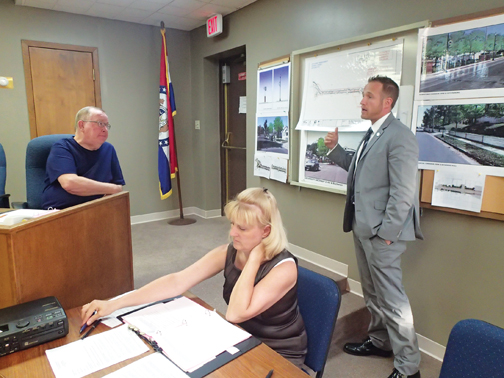
City Manager Greg McDanel gestures toward drawings and diagrams illustrating the Fourth Street streetscape project in May 2014.
FORUM FILE PHOTO
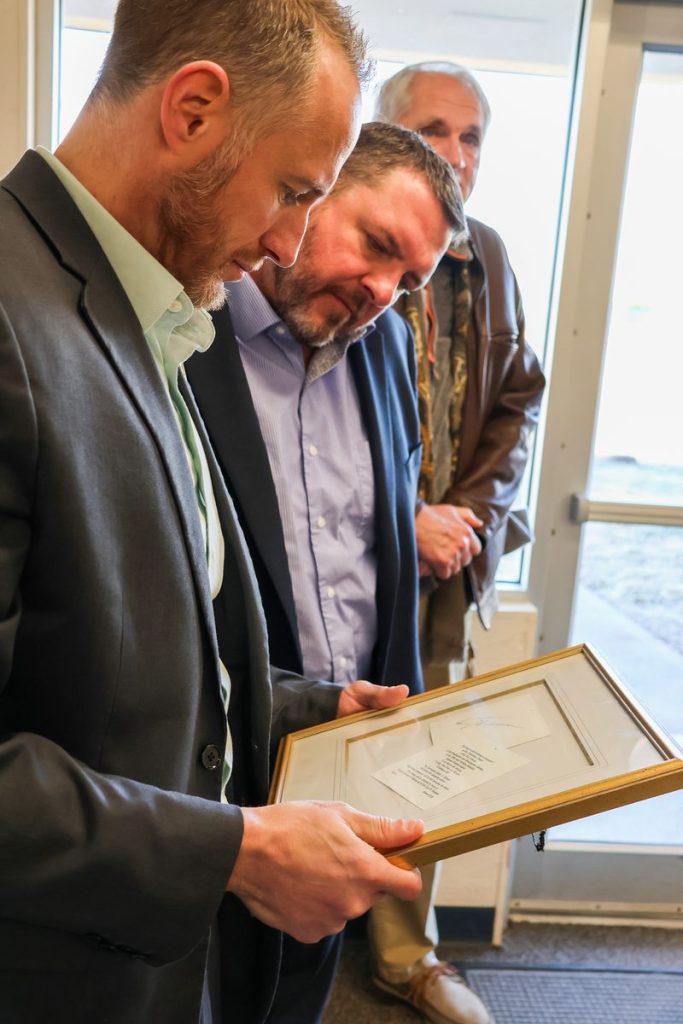
Maryville City Manager Greg McDanel and Maryville Assistant City Manager Ryan Heiland look on Feb. 6 at an invitation to the 1955 dedication of the Martin-Pedersen National Guard Armory.
FORUM FILE PHOTO
Maryville City Manager Greg McDanel speaks during the September 2023 ribbon-cutting ceremony for Phase I of the South Main Corridor Improvement Project.