Barnard leaders looking at lagoon dredging, roads
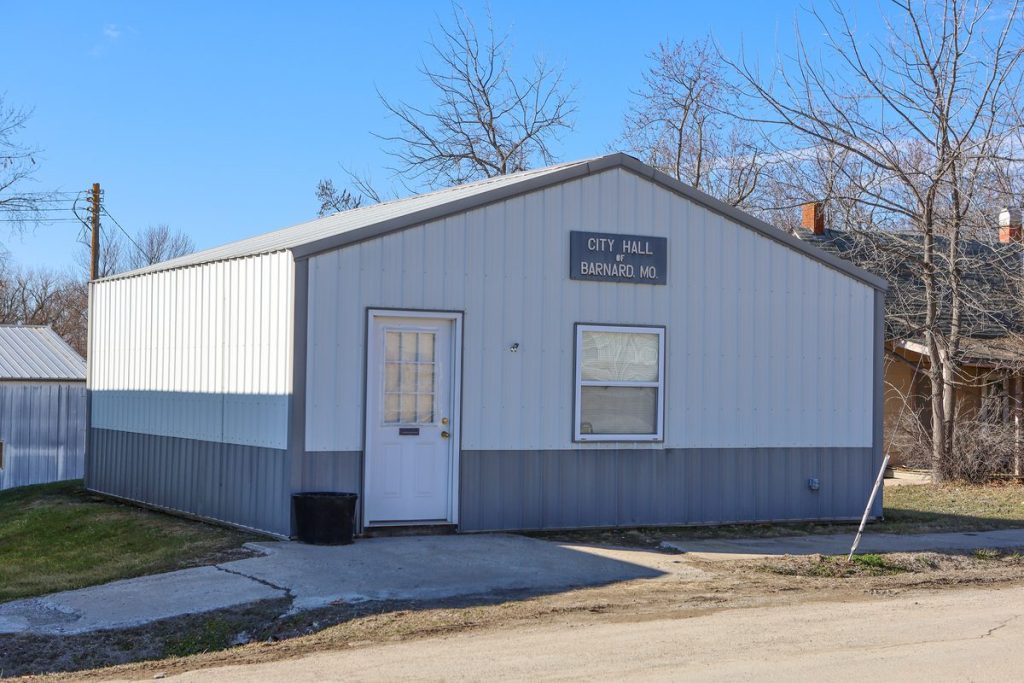
FORUM FILE PHOTO
Barnard City Hall building
BARNARD, Mo. — Barnard leaders are focused on the city lagoon and its needs to meet state and federal requirements.
Barnard Mayor Glenn Miller met with the Nodaway County Commission Thursday, Feb. 6, providing an update on the city and requesting funds for a dredging project.
He told the commission that there is a lot of sludge (at one point he estimated around 32-36 inches) along the bottom of the lagoon, but without an engineering report, it is difficult to know how much. He said the city used some of its direct allocation of American Rescue Plan funds to pay for the engineering report to dredge the lagoon. Prior to paying for the report, the city used Rescue Plan funds from the county government to pay for roadwork near the lagoon to help redirect rainwater near the retention pond, Miller said.
“We’ve done some road repairs specifically in areas that would appear to take water directly to the lagoon system,” Miller said, further explaining that the city moved some stuff around in order to change the tilt of some of the roads so that water is sent away from the lagoon.
Miller requested funds from the county to help with the actual dredging of the lagoon. The city had already looked into grants to assist with the project, he said, but the programs city leaders looked into were either not taking applications or would not have been able to help in the timeframe the city needs to get the dredging done.
Miller told The Forum that according to a letter from the Missouri Department of Natural Resources, next year the city could start incurring a $10,00- per-day fine for its system not meeting state regulations.
According to a Missouri DNR report, as of Oct. 7, the city of Barnard’s wastewater treatment facility is listed on the Water Pollution Control Branch’s Enforcement Case List, but had not yet been referred to the Missouri Attorney General’s Office for any kind of legal action.
South District Commissioner Scott Walk said that Missouri DNR doesn’t typically levy that fine if a city shows that it is making an effort to rectify the problem. One local example of this involves Skidmore, which has been working to repair or replace its outdated sewer plant for nearly a decade, with many of those years under a threat of fines from the state. However, as the project continues to progress, the fines have not been levied.
Miller said he also plans to reach out to his congressmen to ask for any assistance they might be able to provide.
Another aspect of the project involves moving the outflow from the lagoon to the other side, away from a drainage ditch that feeds directly into the One Hundred and Two River. Miller explained that this would provide more ground filtration to the water before it makes its way to the ditch.
According to meeting minutes, the county commission did not make a decision about helping fund the dredging project.
Roads
While looking into preparing roads for some cold-patch work in warmer weather, Miller said he and another alderman have been doing what they can to fill potholes in roads around town.
“It’s amazing how expensive it is to redo roads,” Miller said.
He told the Nodaway County Commission that the company the city has been talking to said that the three-year project to repair Barnard’s roads would cost $250,000 at a minimum.
At the end of that time, there would be maintenance at a cost of around $20,000 on the first portion of the repaired roads.
Miller said the city receives somewhere between $16,000 and $17,000 in funds for road repairs each year.
“So we already can’t afford to maintain them, even if we somehow came up with the money to get all the roads done,” he said.
Miller told The Forum over the phone that Brian Marks, of Maitland, has been a great help to the city. He’s created maps, a list of priorities and indicated how much gravel the city would need to purchase.
This assistance, he said, is much appreciated by the city since it doesn’t have its own maintenance staff.
“Previously we had a maintenance guy, and I think that was part of the reason we are in the situation we are,” Miller said. While not wanting to point out any one specific previous administration, he said there was a lot of work done that didn’t necessarily need to be done in order to keep a full-time maintenance person on staff.
“And so we’re trying to get our head back above water. We can kind of see the light at the end of the tunnel, about five or six years down the road.”
He said the water tower monthly bill will go away along with another couple of monthly bills and that will help the town turn the corner, but that just getting to that point has been a challenge. He’s thankful that a lot of volunteers have been willing to help out, “to try to get us through.”