House passes Farnan-sponsored bill allowing biometric ID for alcohol sales
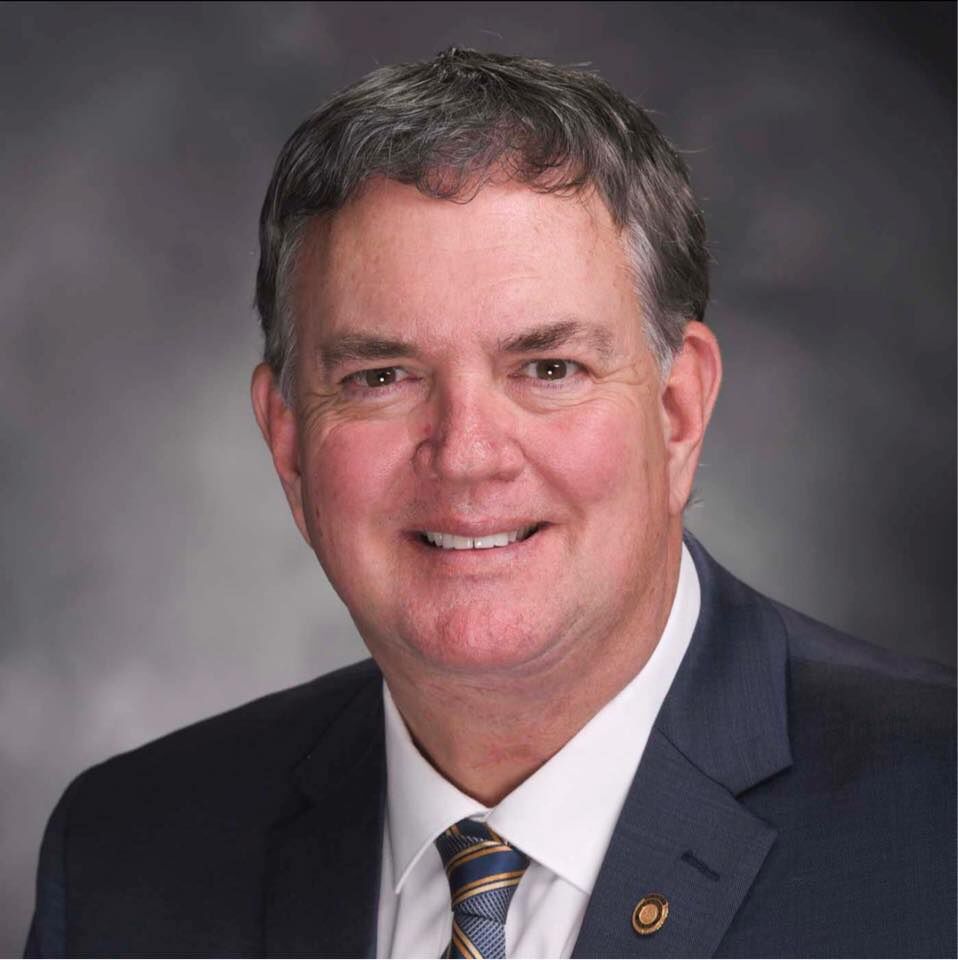
State Rep. Jeff Farnan District 1
JEFFERSON CITY, Mo. — A bill sponsored by Rep. Jeff Farnan, R-Stanberry, narrowly passed the state House last month that would allow biometric methods of age verification, like facial recognition and palm or retina scanning, to be used for alcohol sales.
Under the provisions of HB 2599, Missouri retailers would be allowed to use biometric systems to verify a person’s age when purchasing alcohol only when the person has already provided a valid, government-issued ID to the biometric verification vendor. Some vendors provide systems that they say can identify a person’s age via a face scan using machine learning techniques on millions of such scans to train the system on what a person of legal age looks like. That technique would not be allowed in Missouri under this bill.
Instead, a customer would, for example, allow their driver’s license to be scanned into a system operated by a biometric identification vendor, like CLEAR ID or Amazon. Representatives from both companies testified in favor of the bill, saying that it will be more effective than trying to catch fake IDs and more convenient for customers.
Once a customer is in the system with a verified ID, they could potentially go to any retailer that uses the same vendor and only have to provide a biometric scan, like a face scan, palm scan, fingerprint image or retina scan.
Such systems are in use already in some places across the country with varying requirements. Fans at Allegiant Stadium, home of the Las Vegas Raiders, can order alcohol from their seats from their phone via facial recognition, and fans at Coors Field in Denver can use a palm scanner to verify their age instead of showing a physical ID.
“This legislation represents a proactive step towards modernizing our approach to age verification in alcohol sales,” Farnan said in a news release. “By harnessing the power of secure identity verification systems, we can ensure responsible alcohol distribution while minimizing operational burdens for businesses.”
However, concerns about privacy, naturally, abound.
To use the system at Coors Field, for example, customers must be enrolled in Amazon One, which uses palm prints to verify identity.
Under HB 2599, vendors would be allowed to store and sell customers’ biometric data to third parties with customers’ consent, typically required as a prerequisite for using the system. Customers would also be allowed to opt out of the program and request that their data be removed from the vendor’s database.
The bill would still require all retailers that sell alcohol to accept physical IDs and would not require any retailer to adopt a biometric ID system.
“This legislation reflects our commitment to promoting innovation in regulatory frameworks while safeguarding consumer rights,” House Speaker Dean Plocher, R-Des Peres, said in a statement. “By empowering businesses with the option to implement secure identity verification systems, we are providing more tools for small businesses to ensure they do not sell alcohol to minors.”
The bill passed 86-53 and has moved to the state Senate.