
A Word From Woehlk: County voters should seek to share responsibility for major projects
SKYE POURNAZARI/THE FORUM
A Word From Woehlk: County voters should seek to share responsibility for major projects
When I first moved to “Maryville,” I lived off of Icon Road — which is to say, in the alternate dimension where Country Club Road is called Icon Road, Maryville isn’t actually in Maryville, Jimmy John’s doesn’t deliver, and fortune cookies come wrapped up inside slips of paper with bad things that already happened to someone else written on them. A truly alien world from the one across the border.
But according to a 2018 housing study, my predicament was literally more common than not: Nearly two-thirds of people who work in Maryville don’t live inside city limits.
It’s no secret rural areas like ours are undergoing a significant population exodus, and we have certainly not been immune. As the great contraction of rural areas continues, services and amenities for our countywide community will only become more and more centralized — it’s inevitable.
It’s not surprising, then, that we’ve seen more and more projects and initiatives that have a countywide scope but are primarily carried out by the city of Maryville. You don’t need to look further than the front page of this week’s newspaper to see the latest, along with countywide initiatives by the Maryville Public Library and some water infrastructure partnerships, just to name a couple more.
These kinds of collaborations are notable because government agencies — like most of the constituents they represent — aren’t typically very interested in using their money on something that they won’t have total control over. And conversely, they also aren’t very interested in letting someone else join in who brings with them their own vision and ideas of how to complete a project. That’s natural.
Joint initiatives like the consolidated 911 dispatch center have overcome that friction, even though it’s certainly been present. Other projects, like a potential collaboration between the city and the rural water district for a new water treatment facility, are still grappling with it.
Ultimately, many public officials are — justifiably — petrified that their constituents will not be willing to examine a tax or fee increase proposal closely and come to the conclusion that an increase in their contribution will be worth the proposed community benefit. I get that, and that fear is certainly not unfounded. And it’s especially tough when there is overlap between multiple groups of voters — what if the other guy is getting a better deal than me?
But, if I still lived on the other side of the imaginary line on Icon Road, I think I would be more concerned now that my money could be going toward ambitious projects that benefit our countywide community, but isn’t. And consequently, I’d have very little say in how those foundational projects take shape.
That’s not because my Scrooge McDuck-like pile of cash is burning a hole through my vault, it’s because there really can’t be true representation without taxation: you’ve got to have skin in the game to play.
Over the next several years, as major projects that are just getting off the ground now start to pick up steam, I think we’ll continue to see more joint projects between city and county agencies, if only out of necessity. But the pattern they’ve been following so far is that city officials and city voters are the ones who get to have the lion’s share of the input on what those projects look like because they typically involve city-run operations that are funded by city taxpayers.
If you’re looking for fairness in a deal between two parties, that definitely makes sense. But it certainly isn’t conducive to reducing the natural friction, and more importantly, it doesn’t reflect the reality that our countywide community is too small and interconnected to believe that we are anything but one community — and we’re only becoming more so.
Like so many of the ambitious, community-defining projects that are in various stages of being completed and getting underway in Maryville, a new or refurbished aquatic center will be a countywide draw. Kids who live in Burlington Junction, Conception, Hopkins, Ravenwood — even families from as far away as Icon Road — already use the city’s pool regularly and will undoubtedly continue to spend summer days there when it’s either renovated or replaced.
And that’s exactly how it should be. The only public pool in our county, in a city where almost two-thirds of the city’s workforce lives outside the city limits, absolutely should be built to serve the entire county, just like our water system, just like our economic development strategy, just like our emergency services.
I don’t have kids. I don’t golf, I don’t camp and I don’t fish. And I’ve never swum in the current city pool and don’t plan to swim in the next one either (which really, is a contribution to the community in itself — you’re welcome). But that doesn’t mean I’m not interested in the school district’s long-range facilities plan, or the RV park expansion and the work on the Mozingo Visitors Center, or that I don’t want our aquatic center to be something we can be proud of as a community for at least a decade or two.
I want the people who do use and rely on those things to be able to find the best versions of them possible right here, because that’s what makes the best possible version of our community as a whole.
Helping to pay for those things — volunteering to pay for those things — isn’t a burden. My money doesn’t disappear, it becomes my voice, and the results echo everywhere we go in our community.
If county residents want that same opportunity, they will have to insist to and convince public officials that they are just as eager to be heard in the same way if they want to overcome the fears that they won’t think their voices are worth the cost of adding to the communitywide chorus.
Now’s the time to start.
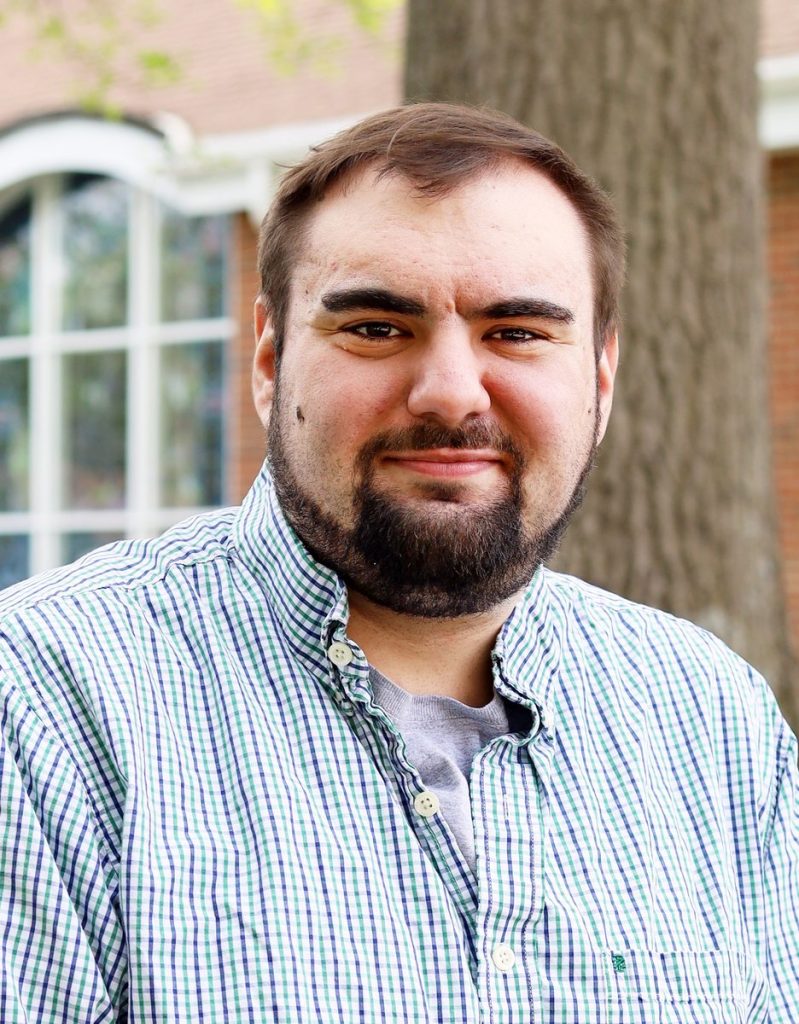
Geoffrey Woehlk is the news editor at The Forum.



