Alma Nash’s suffrage legacy to live on at Pocket Park
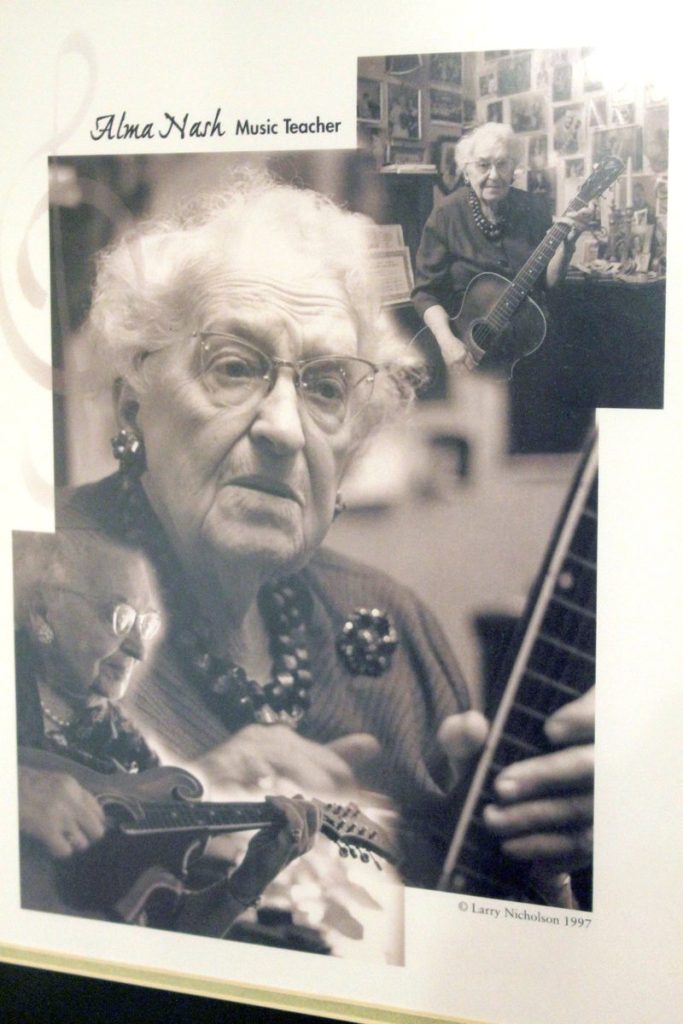
FORUM FILE PHOTO
Alma Nash, pictured later in life in a display at the Nodaway County Historical Society Museum.
MARYVILLE, Mo. — In January 1913, Maryville native Alma Nash answered an advertisement from a newspaper in Kansas City calling for local bands to participate in the Woman Suffrage Procession that would take place in March of that year.
Two months later, thousands of marchers from across the country would stream down Pennsylvania Avenue, demanding the right to vote — all following Alma Nash.
Now, 110 years later, Nash and her band’s involvement in the suffrage movement is set to be immortalized in a park in Maryville on Friday.
Nash, who was 30 at the time, was the leader of a local band composed of women from the Maryville Seminary, recent graduates of the school and other educators in the area. The band, Missouri Ladies Military Band, was accepted to perform at the procession and spent the next two months fundraising for travel and learning to march.
“They’ve only ever been a concert band, so, performing sitting down,” said Elyssa Ford, history professor at Northwest Missouri State University and president of the Nodaway County Historical Society. “They had to figure out how to march and play at the same time.”
Further complicating matters, the procession was to take place in March, a day before the inauguration of President Woodrow Wilson after an election in which no women were allowed to vote. That meant the concert band had to learn how to become a marching band in whatever indoor spaces they could find during the cold of January and February.
Ford said band members often had to practice marching back and forth in small buildings for the parade that would stretch multiple miles.
On March 3, thousands of women joined the National American Woman Suffrage Association in the Woman Suffrage Procession.
Nash and her band arrived in Washington just hours before the parade started and were set to be toward the beginning of the procession. But as the time for the parade neared, a large group of mainly male protesters attempted to prevent the parade from happening.
According to the Nodaway County Historical Society website, Nash said an officer of the suffrage movement rushed over to her and asked her band to move to the front in hopes of pushing the protesters off the street as the band started marching down the street with their instruments.
Luckily the plan worked and at the musical direction of Alma Nash, the Woman Suffrage Procession — thousands of marchers including grand floats and other bands — marched down Pennsylvania Avenue with Maryville’s own Missouri Ladies Military Band leading the way.
Of all the bands participating in the parade, Missouri Ladies Military Band appears to be the only allwomen band, according to the Historical Society.
Following the parade, the 22 women in Nash’s band, along with Nash and her mother, attended a session of Congress, visited the Supreme Court, met with their local Missouri representatives and attended President Wilson’s inauguration.
Upon their return from Washington, the band planned to tour the state and play at various county fairs to “soothe the savage hearts of man,” according to reports from local newspapers at the time.
“But it did not work because the state legislature voted against women getting the right to vote, yet again,” Ford said.
Alma Nash’s involvement in the suffrage movement seemed to have ended not long after returning back to Maryville, but the Missouri Ladies Military Band was not the only time people of Nodaway County interacted with the suffrage movement.
In fact, Maryville has a long history of being home to and hosting women who were at the forefront of the movement.
Edith Davenport Miller was a member of Nash’s band but did not participate in the parade as she played the piano.
“She talked about not being able to come home one evening, because she had to go debate suffrage and kind of all this neat stuff that was going on here in Maryville,” Ford said, recalling the research she did on suffragists in Nodaway County.
From 1876 to 1915, six women who were active in the movement visited Maryville to give speeches for various events.
“I think what’s so interesting about it is that they also were invited by, not a suffrage organization, but all of these different organizations,” Ford said. “And a lot of those organizations were co-ed. They had men and women who were members. So, it wasn’t just women who were inviting them.”
In 1876, for example, Susan B. Anthony came to Maryville by invitation of the Library Association to help raise money to purchase books for the new library in town, according to Ford. Three years later, the Ladies Literary Society invited Elizabeth Cady Stanton to give a speech.
“Susan B. Anthony went everywhere,” Ford said. “But Elizabeth Cady Stanton had like five kids and was married and she didn’t travel that much. And so it’s amazing, I think it’s shocking, that she came to Maryville.”
Phoebe Couzins, who helped Anthony and Stanton form the National Woman Suffrage Association, visited in 1901 and 1902 by invitation of the Maryville Lecture Association. In 1915, the college invited suffragist Lavinia Engle, who would later hold a position in the Social Security Administration under the Franklin D. Roosevelt administration.
That same year, a women’s club invited Helen Keller, who spoke to 800 people at the local Methodist Church, according to the Nodaway County Historical Society’s website.
Now, over a hundred years later, Maryville will be recognizing Alma Nash and the Missouri Ladies Military Band with a historical marker on Friday, March 24. The marker is part of the National Votes for Women Trail with the William G. Pomeroy Foundation, which is collecting and recognizing sites across the country that tell the story of the passage to the 19th Amendment, according to its website.
Ford said the organization reached out to her about Alma Nash and Ford collaborated with the organization to determine if the marker should be for Alma Nash, the band or the town’s suffrage history in general.
When it came time to decide the location of the marker, Ford reached out to Downtown Maryville and the Maryville Tourism Committee to find the best spot for it.
“Dr. Ford had reached out to us about potentially installing the marker in the Pocket Park because of its proximity to the Rose Theater,” Stephanie Campbell Yount, board president for Downtown Maryville, told The Forum. “The Union Hall on the 2nd floor of the Rose Theater had hosted several suffrage speakers during that time.”
The Pomeroy Foundation suggested a less specific location and thus, the Pocket Park was mentioned. Ford said the park made the most sense as it could highlight Alma Nash, the band and the speakers who visited Maryville.
“Having that marker there, people just are randomly going to be walking by and look at it,” Ford said. “Whenever there’s events at the park, they’re going to see it, and then realize that there was this really interesting and important thing that was happening here in terms of women’s suffrage.
“That this band, led by this woman, participated in this parade to get women the right to vote and it received national attention.”
The unveiling of the Alma Nash Historical Marker will be held in the Pocket Park at 11 a.m. on Friday, March 24. A reception will follow at the Nodaway County Historical Society where visitors can view the museum’s display on Alma Nash and the band, which includes one of the uniforms worn in the Woman Suffrage Procession.
“It’s quite a privilege for our area to have the opportunity to honor Ms. Nash in this way, and to tell the story of a special part of our city’s history,” Yount said.
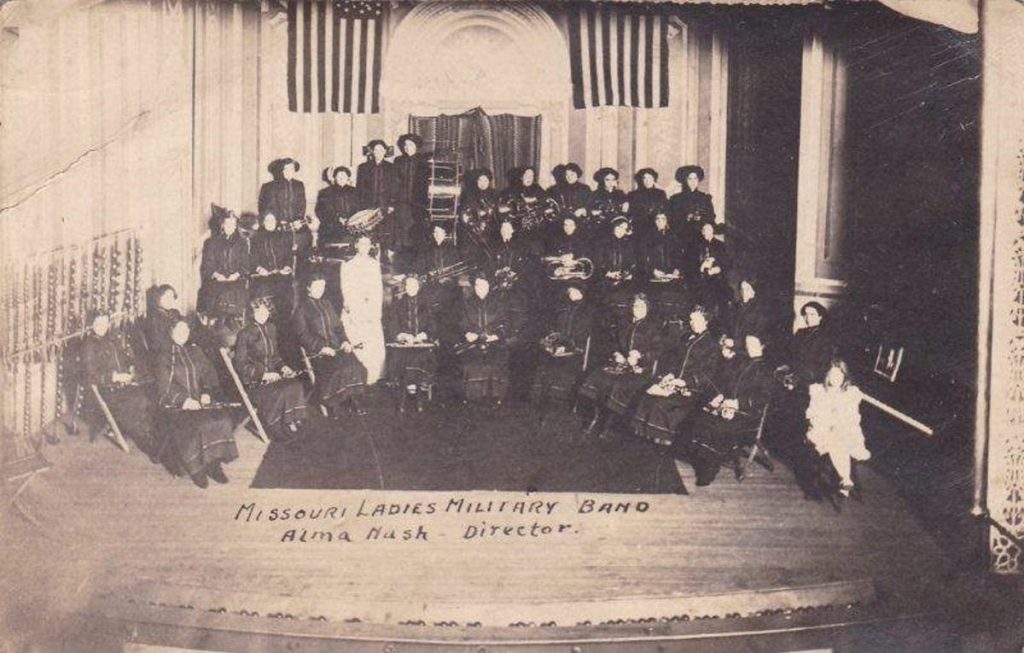
IMAGE FROM NODAWAY COUNTY HISTORICAL SOCIETY
The Missouri Ladies Military Band posed for a photo.
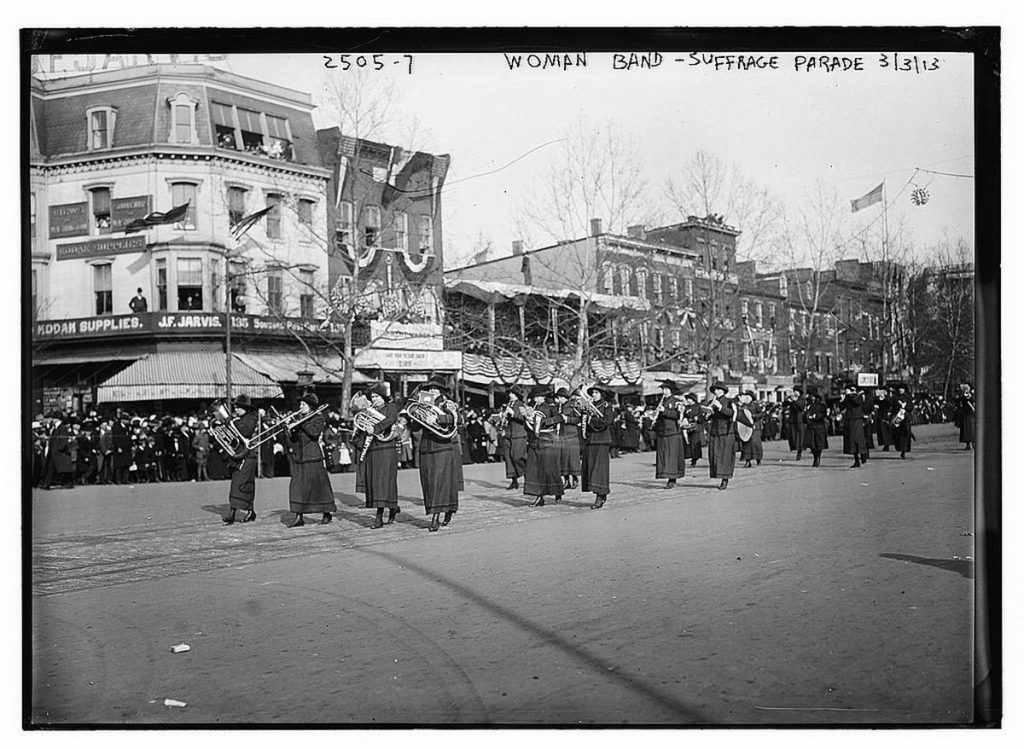
COURTESY OF THE LIBRARY OF CONGRESS
The Missouri Ladies Military Band leads the Woman Suffrage Procession down Pennsylvania Avenue on March 3, 1913.