COLUMN: Part 1: What if we really lived the beatitudes of Jesus?

Skye Pournazari
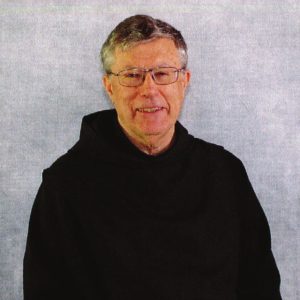
Pastor Kim Mitchell First United Methodist Church
Hello, Maryville! Throughout the month of August, I will be sharing some thoughts on the meaning and purpose of the blessings Jesus speaks of in Matthew 5, by asking the question, what if we really lived the beatitudes of Jesus?
Matthew 5 kicks off the Sermon on the Mount, which continues through Matthew 7. There are great life-giving teachings in those chapters. I encourage you to read them. The author Matthew, most likely the disciple called out of his tax collector position to follow Jesus, sets the scene for a counter-cultural message that had the power to transform the world. We await the full revelation of that transformation today.
Beatitudes. I like to say Beautiful Attitudes! Where does the name Beatitude come from? As written on https://www.etymonline.com/word/beatitude:
beatitude (n.),early 15c., “supreme happiness,” from French béatitude (15c.) and directly from Latin beatitudinem (nominative beatitudo) “state of blessedness,” from past participle stem of beare “make happy” (see Beatrice). Attested from 1520s as “a declaration of blessedness” (usually plural, beatitudes, especially in reference to the Sermon on the Mount).
In the Latin Vulgate (late-4th-century Latin translation of the Bible), each of these blessings begins with the word beati, which translates to “happy”, “rich” or “blessed” (plural adjective). The corresponding word in the original Greek is μακάριοι (makarioi), with the same meanings. “Blessed are the poor in spirit” appears in Latin as beati pauperes spiritu. I cannot say this Latin phrase, but I am pretty sure my mother can. She took Latin in high school and at nursing school. Latin gave us our medical terms. Latin is a scholarly language influenced by the Roman Empire through art and poetry. Folks smarter than I say that Latin belongs to the Romance branch (and is the ancestor of modern languages such as French, Spanish, Italian, Portuguese, and Romanian); whereas Greek belongs to the Hellenic branch, where it is quite alone in its own language. Greek and Latin are only related in that they’re both Indo-European, yet these languages can teach us so much about scriptural words. If you like to study the Bible and where words come from, I am sure you have researched the Hebrew and Greek words to assist you.
This leads me to ask, where does the -tude in beatitude come from? The Google world was mostly silent on this. I remember back in the ’80s my peers and I used the word ‘TUDE’ to shorten the word attitude. We simply did not have time to say the whole word. But ‘TUDE’ also reflected a different type of attitude sometimes contrary to the norm. My thoughts and study of scripture leads me to see that the inspired word of God is not merely words on the page, but words to apply to our life. In Christ we are called to reflect a different type of attitude contrary to the world. Hence, the taking on of the Beautiful Attitudes!!
How would we apply the words of Jesus’ Sermon on the Mount, beginning with the Beatitudes, to our daily life? What does it mean to live in the Beatitudes? The beatitudes are a set of ideas conceived by Jesus about the way people must act and the things we must do to achieve “blessedness,” a well-being of the soul, not only for ourselves, but for the world, all of creation.
Blessed and happy are those who are poor in spirit, for theirs is the kingdom of heaven (Matthew 7:3). To be poor in spirit means that we recognize with humility that we are spiritually bankrupt and in need of the saving grace of God. “For thus says the One who is high and lifted up, who inhabits eternity, whose name is Holy: ‘I dwell in a high and holy place, and with the oppressed and humble in spirit, to restore the spirit of the lowly and revive the heart of the contrite (Isaiah 57:15 Berean Study Bible).’” What if we really lived the beatitude of being poor in spirit? God dwells with us all to enrich our lives here on earth. Too much pride and personal independence cannot take us far. To connect with God’s Holy Kingdom, we must let loose of our pride. With Jesus, the announcement had been made. The Kingdom of God is near, therefore we must find ourselves taking on the beautiful attitudes that create community here and now, as we await that eternal kingdom, the fulfillment of all blessings and happiness.