Rural water customers to see rate increase
FORUM FILE PHOTO
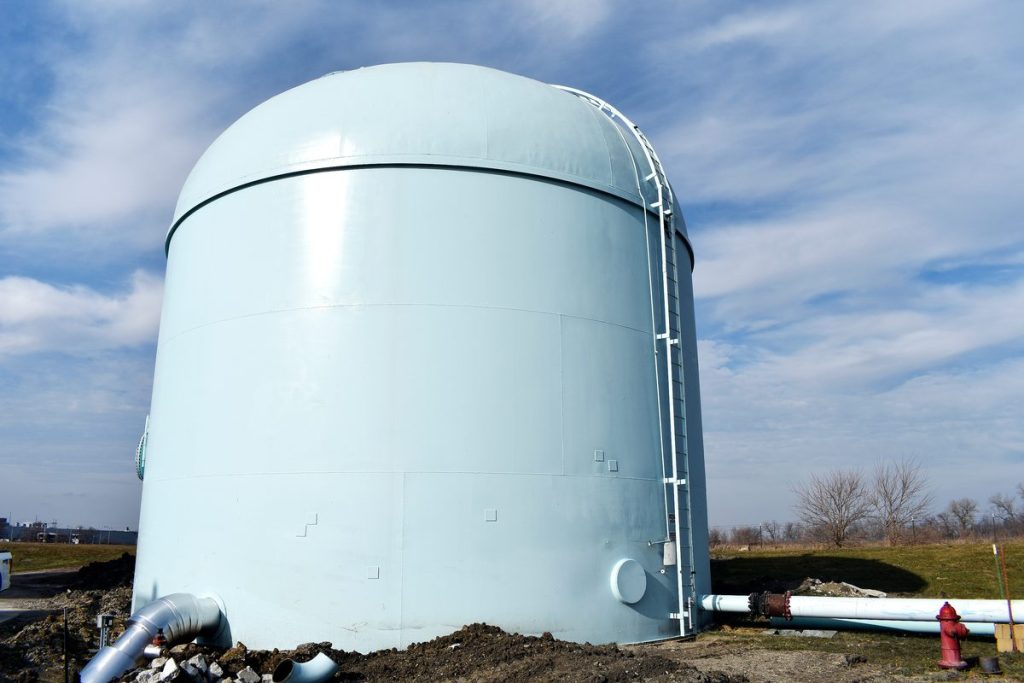
A granular activated carbon adsorber installed at the Maryville Water Treatment Plant late last year will more effectively filter out problematic compounds, like geosmin, that cause taste and odor issues with drinking water. The city of Maryville and Public Water Supply District No. 1 shared the $1.3 million cost of the adsorber, which crews worked to get online just as geosmin levels at Mozingo Lake began to spike. Brock Pfost of PWSD No. 1 said the district was glad to have the adsorber working well when it was needed. “They worked their butt off down there,” he said.
MARYVILLE, Mo. — Separate from the significant increase to city of Maryville customers, rural water customers will also see an increase on their water bills this year — they just don’t yet know how much.
“Basically, the board hasn’t made any decision, but the decision has to be made to raise rates — there’s no way to sugarcoat that,” said Brock Pfost with Public Water Supply District No. 1.
The first of two substantial water and sewer rate increases took effect on Jan. 1 for Maryville customers, with the typical city resident set to see an increase of about $9 per month starting with the first bill in February.
But for the thousands of PWSD No. 1 customers in the county, just how much of an increase they’ll see is still to be determined.
The water district buys about 90 percent of its water from the city — about 190 million gallons last year — and is the city’s largest customer. The remaining 10 percent, Pfost said, comes from another wholesaler in Clarinda, Iowa, and from a plant owned by PWSD No. 1 in Gentry County that also provides water to Grant City, Parnell and Stanberry.
Although any rate increase by the city on the water district will ultimately affect the water district’s customers, it has sometimes been able to absorb smaller increases without immediately passing on the cost.
That’s out of the question this time. A letter from the district to its customers said the rate increase will result in another $10,000 per month from the district this year, with another increase of the same size is expected next year.
That would likely mean an increase on customers’ bills somewhere between $5-10 this year, Pfost indicated. But the PWSD No. 1 board is still looking at what the exact amount will be.
Pfost said it’s likely the board will discuss the issue at its January meeting and make a decision on the rate increase in February. Any increase would be unlikely to go into effect before April, with the district absorbing the higher costs in the meantime.
“We’re just looking for ways to keep the rates as low as we can,” said board president Norman Wilson.
The rate increases by the city of Maryville came after a study showed the city’s water/sewer fund would be unable to keep up with expenses as soon as the end of fiscal year 2022 in September. Thus, the rate increases only cover the existing expenses of running the water system, not additional costs or projects like the recently installed granular activated carbon adsorber or a possible new water treatment facility. Those proposed rate increases would be most significant this year and next, with smaller hikes scheduled out over the three years after that.
Since Mozingo Lake was closed in January 2020 due to high levels of cyanobacteria — catapulting the water treatment system to the top of the priority list — city and water district officials have worked closely on sketching out what the future of the region’s water system will look like. The two split the cost of the $1.3 million GAC adsorber, which went online late last year, and have kept in close contact with regular meetings over the past two years.
“Basically, we can’t do without them, and they can’t do without us,” Wilson said. “It’s kind of a win-win situation where both people gotta be happy or none of them are happy.”
Right now, the preference from both groups seems to be a new water treatment plant to replace the aging, inadequate facility currently in use that would require a significant retrofit to properly address possible contaminants that have caused persistent taste and odor issues with drinking water.
“In order for that not to happen, somebody’s gonna have to get off the bus, because they’re both going the same direction: towards a cooperative project,” Pfost said of a possible water treatment plant in the future.
But such a project would also mean more significant rate hikes over the next decade.
The next step in that process would be a pilot water treatment plant, which the Missouri Department of Natural Resources requires be built first. The pilot plant would be used to first test out the efficacy of different treatment methods — like using ozone, granular activated carbon and others — to determine the best strategies for use in a new, full-fledged facility.
The pilot plant, which would likely operate for about nine months, was estimated by the city to cost between $750,000-$1 million. The city has set aside $500,000 in federal American Rescue Plan funds for the project, along with another $500,000 in this year’s budget.
The two entities have formed a working group that continues to discuss cost-sharing arrangements, including what effects that may have on a new water purchase agreement over the long term.